

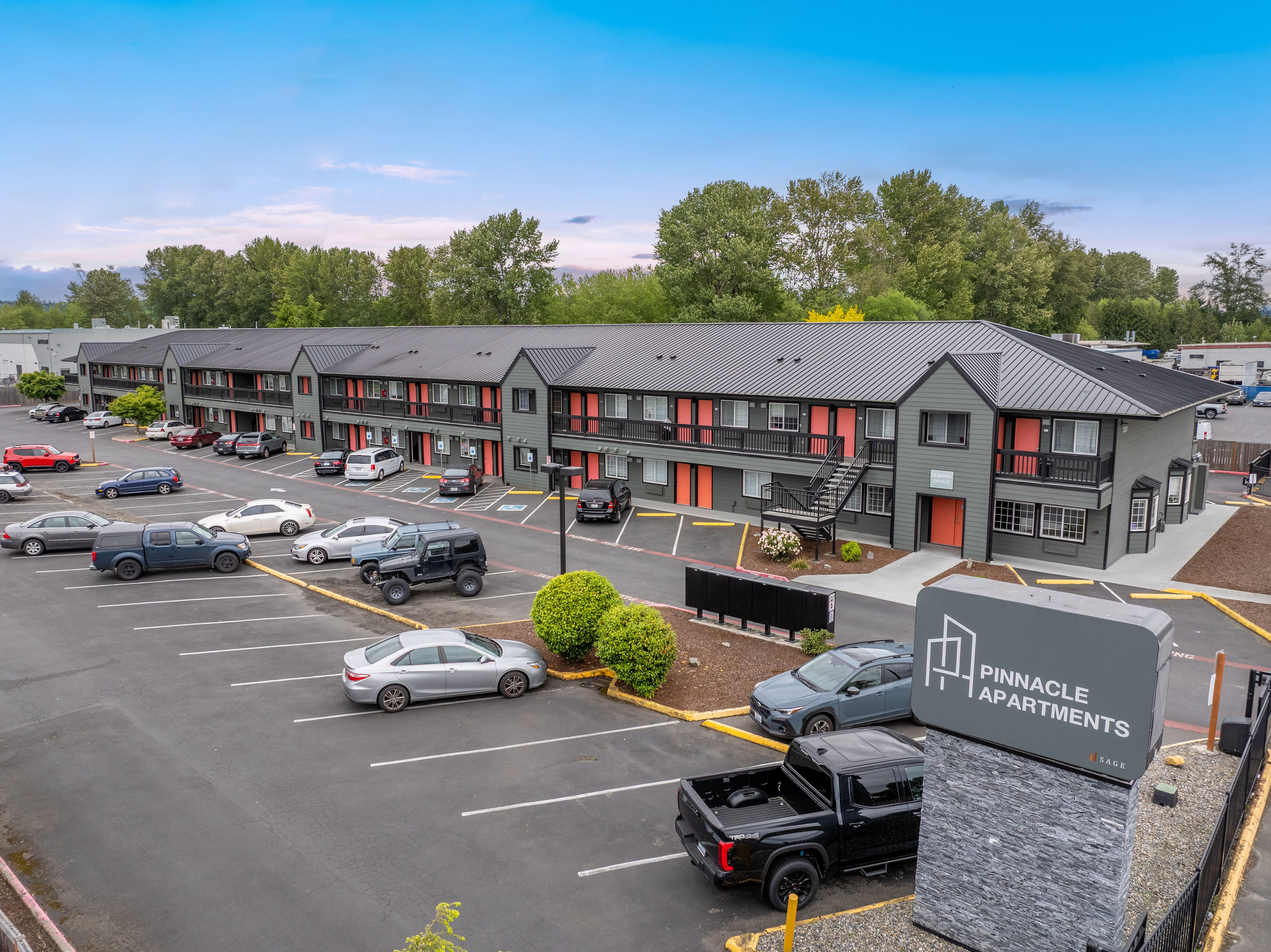
Why 1031 Exchanges and Real Estate Syndications Are a Natural Fit
If you've recently sold an investment property — or you're about to — you're staring at a familiar problem: a significant capital gains tax bill. For accredited investors, the 1031 exchange offers one of the most powerful tools in the tax code. And when paired with a real estate syndication focused on hotel-to-apartment conversions, it becomes a strategy that combines tax deferral with outsized return potential.
Here's how it works, and why more sophisticated investors are using this approach to redeploy capital into workforce housing conversions.
How 1031 Exchanges Work
Section 1031 of the Internal Revenue Code allows investors to defer capital gains taxes when they sell one investment property and reinvest the proceeds into a "like-kind" property. The key requirements are straightforward: you must identify a replacement property within 45 days of closing and complete the exchange within 180 days. The replacement property must be of equal or greater value, and you must use a qualified intermediary to hold funds during the exchange period.
What many investors don't realize is that "like-kind" is interpreted broadly for real estate. A single-family rental can be exchanged into a multifamily syndication interest — as long as the syndication is structured correctly.
When Syndication Interests Qualify as 1031 Replacement Property
Not all syndications qualify. The critical distinction is between a direct ownership interest in real property and a securities interest. Most standard LP (limited partnership) syndication interests are classified as securities and do not qualify for 1031 treatment.
However, certain structures do qualify:
Tenancy-in-Common (TIC) arrangements — where investors hold a direct fractional interest in the underlying property — are generally recognized as qualifying replacement property. Delaware Statutory Trusts (DSTs) also qualify under IRS Revenue Ruling 2004-86, as each investor is treated as owning an undivided interest in the trust's assets.
When evaluating a syndication for 1031 compatibility, ask these questions: Does the structure provide direct property ownership? Is the sponsor experienced with 1031 exchange timelines? Can they accommodate your 45-day identification and 180-day closing deadlines?
Why Hotel-to-Apartment Conversions Are Ideal 1031 Targets
The financial characteristics of hotel-to-housing conversions create compelling advantages for 1031 exchange investors specifically.
Accelerated depreciation. Hotel conversion properties typically undergo substantial renovation — kitchen installations, electrical upgrades, plumbing work, new HVAC systems. These capital improvements create significant depreciation deductions in the early years of ownership, which can shelter cash flow from taxation beyond the initial capital gains deferral.
Value creation through repositioning. The core financial thesis of hotel-to-apartment conversions is cap rate arbitrage. Economy hotels trade at 10-14% cap rates while stabilized apartments trade at 5-8% cap rates. The same building, converted from a volatile hotel business to stable residential real estate, can increase in value by 50-70% — even before factoring in renovation-driven NOI growth. Across a portfolio of about 30 conversions, this pattern has proven remarkably consistent.
Cost basis advantages. Conversions typically cost $50,000 to $150,000 per unit all-in (acquisition plus renovation), compared to $250,000 to $500,000+ per unit for new multifamily construction. This lower cost basis means more units per invested dollar and greater upside potential.
The Tax Benefits Stack Up
When structured correctly, the tax advantages compound:
Capital gains deferral through the 1031 exchange itself — potentially hundreds of thousands in deferred taxes on the initial sale. Cost segregation studies on the converted property can accelerate depreciation, creating paper losses that offset cash distributions. Bonus depreciation on qualifying components (certain fixtures, appliances, flooring) provides additional front-loaded deductions.
For investors in high-tax states, the combined effect can be substantial. Rather than losing 25-35% of your gains to federal and state capital gains taxes, that full amount continues working — compounding returns across the hold period.
Timeline Considerations for 1031 Exchange Investors
Hotel conversion syndications operate on timelines that can align well with 1031 requirements, but advance planning is essential. Most conversion projects involve a 12-18 month acquisition and due diligence period before closing. If you're planning a 1031 exchange, the ideal approach is to identify conversion opportunities before selling your current property — giving you time to align timelines.
Some sponsors maintain a pipeline of acquisition-stage properties specifically to accommodate 1031 exchange investors. This is worth asking about during your initial conversations.
What to Look for in a Sponsor
Beyond 1031 structural compatibility, evaluate sponsors on their conversion track record. Key questions include: How many hotel-to-apartment conversions have they completed? What were the actual returns versus projections? How do they handle the complexity — hotel conversions rate 8-8.5 out of 10 on the difficulty scale, and operator quality is the single biggest determinant of outcomes.
Look for sponsors who are operators, not just fund managers. The best conversion sponsors are hands-on — they navigate building departments, manage construction, and understand the specific challenges of transforming hotels into housing. As detailed in our upcoming practitioner's manual, there is no such thing as passive real estate income; someone is always doing the work.
Is a 1031 Exchange into Hotel Conversions Right for You?
This strategy works best for accredited investors who have significant capital gains from a property sale, want to maintain real estate exposure, are comfortable with a 2-5 year hold period, and want their capital working in an asset class with both strong return potential and genuine social impact — creating workforce housing for families earning $35,000 to $65,000 annually who have been abandoned by the traditional housing market.
If you're considering a 1031 exchange and want to explore how hotel-to-apartment conversion investments might fit your tax strategy, reach out to learn more about current opportunities.
Related Articles
- Self-Directed IRA Real Estate: How to Invest Retirement Funds in Hotel Conversions
- Opportunity Zone Real Estate Investments: Hotel Conversions as Qualified Projects
- 1031 Exchange vs Opportunity Zone: Which Tax Strategy Is Right for Your Gains?
- Cap Rate Arbitrage: How Hotel-to-Apartment Conversions Create 50-70% Value Increases
- Real Estate Syndication vs REIT: Which Is Better for Accredited Investors?