
Hotel Conversion to Apartments: The Complete Guide to Adaptive Reuse Investing
Short answer: A hotel-to-apartment conversion buys an existing hotel, usually one that is underperforming, and renovates it into apartments by adding kitchens, updating building systems, and reworking common areas. Because the structure already exists, a conversion can bring housing to market faster than new construction. Sage Investment Group, a Kirkland, Washington sponsor, has built a portfolio of 32 properties and 2,999 units across six states through about 30 hotel-to-apartment conversions. Its conversions typically take 6–12 months.
The American housing landscape is undergoing a transformation. As cities grapple with a shortage of 7.3 million affordable homes and hotel owners face unprecedented challenges, a powerful solution has emerged: hotel conversion to apartments. This innovative approach is reshaping how we create housing, offering investors an opportunity to generate strong returns while addressing one of the nation's most pressing social needs.
In 2026, hotel-to-apartment conversions represent more than 37% of all adaptive reuse projects nationwide, delivering over 9,100 new apartments in 2024 alone—a 46% increase over the previous year. For accredited investors seeking alternatives to traditional real estate investments, hotel conversions offer a compelling value proposition: properties acquired and renovated at approximately 50% of new construction costs, completed in 6-12 months instead of years, and generating target returns of 18-25% IRR with quarterly distributions.
This comprehensive guide explores why hotel to apartment conversion has become the fastest-growing segment in multifamily development, how the conversion process works, and what makes this strategy attractive for both impact-focused and return-driven investors.
Why Hotels Are Being Converted to Apartments
The surge in hotel to multifamily conversion is driven by converging market forces affecting both the hospitality and housing sectors.
The Hotel Industry's Perfect Storm
The hotel industry entered 2026 facing significant headwinds. While leisure travel has recovered from pandemic lows, business travel patterns have permanently shifted due to hybrid work arrangements and virtual meeting technology. According to hospitality industry forecasts, many properties won't return to pre-pandemic revenue per available room (RevPAR) levels until 2027 or beyond.
This pressure has been particularly acute for mid-market and economy hotels in secondary locations. Rising operational costs—including labor, utilities, insurance, and maintenance—combined with inconsistent occupancy have squeezed profit margins. Many hotel owners are confronting impending debt maturities with properties that can no longer support existing loan terms at current interest rates.
Extended-stay hotels and limited-service properties have become prime conversion candidates. These assets often feature larger room sizes with kitchenettes already in place, making them structurally ideal for residential use. When occupancy rates decline and operational costs rise, selling to a conversion buyer often yields a better return than continuing to operate as a hotel.
America's Housing Affordability Crisis
On the other side of the equation, the United States faces an unprecedented housing shortage. The National Low Income Housing Coalition estimates a deficit of 7.3 million affordable homes for lower-income citizens—up 8% since 2019. This shortage affects essential workers, young professionals, and families living on fixed incomes who are increasingly priced out of traditional housing markets.
Ground-up apartment construction costs in major metropolitan areas now average $350 per square foot, translating to $150,000-$200,000 per unit. These high development costs force developers to charge premium rents that exclude the very demographic most in need of housing. Restrictive zoning, limited available land, and lengthy permitting processes further constrain new supply in the markets where housing is needed most.
The Conversion Solution
Hotel conversion to apartments bridges this gap. By repurposing existing structures, developers can create quality housing at a fraction of new construction costs while preserving the environmental and financial resources that would otherwise go into demolition and new building. Adaptive reuse of hotels reduces construction waste by up to 40% compared to new development and allows housing to come online in 6-12 months instead of 3-5 years.
For communities, hotel conversions can revitalize neighborhoods, preserve architectural character, and add housing supply without consuming additional land. For investors, they represent an opportunity to acquire assets below replacement cost, execute value-add renovations with predictable timelines, and generate attractive returns while creating positive social impact.
The Economics of Hotel Conversion
The financial advantages of converting hotels to apartments are compelling and quantifiable.
50% of Replacement Cost
The most significant economic benefit is the acquisition and conversion cost differential. While new multifamily construction in urban markets averages $150,000-$200,000 per unit, hotel conversions typically cost $60,000-$70,000 per unit all-in—including acquisition, renovation, and soft costs.
This dramatic cost advantage stems from several factors. First, the hotel's existing structure, foundation, and building envelope remain intact. The property already has parking, utilities infrastructure, plumbing risers, and electrical service sized for the building. These elements—which represent substantial costs in new construction—are included in the acquisition price.
Second, hotels are often acquired below their replacement value. Financial distress, changing market dynamics, and motivated sellers create opportunities to purchase properties at favorable pricing. When a hotel owner faces debt maturity, declining occupancy, or deferred maintenance challenges, selling to a conversion buyer may be their best exit strategy.
Third, the existing building permits and zoning approvals remain in place or are easier to modify. Converting an existing hotel to residential use typically requires simpler permitting than securing approvals for new construction, reducing both timeline and soft costs.
The 50% cost advantage translates directly to rental affordability. When a developer's all-in basis is half that of new construction, they can charge rents $300-$500 below comparable Class A apartments while still achieving attractive returns. This creates "naturally affordable" housing that serves workforce populations without requiring ongoing subsidies.
Faster Timeline: 6-12 Months vs. 3-5 Years
Time is money in real estate development, and hotel conversions offer significant timeline advantages over ground-up construction.
A typical new multifamily project requires 6-12 months for land acquisition and entitlements, 12-18 months for design and permitting, and 18-30 months for construction—a total of 36-60 months from concept to occupancy. During this extended timeline, the developer carries land and construction costs without generating revenue, increasing both risk and required returns.
Hotel conversions compress this timeline dramatically. With the structure already in place, renovation work can begin immediately after closing. The conversion process typically follows this accelerated schedule:
- Months 1-2: Due diligence, design finalization, and permitting
- Months 3-12: Phased renovation of interior units, common areas, and amenities
- Months 6-18: Rolling lease-up as units become available
Many conversion projects begin leasing units on a rolling basis as renovations complete by floor or wing. This phased approach allows properties to start generating revenue while construction continues, reducing the capital-at-risk period and improving cash-on-cash returns.
The faster timeline also reduces construction risk. Shorter projects face less exposure to cost escalation, labor shortages, and market changes. In rapidly appreciating markets, getting to stabilized occupancy 18-24 months earlier can add significant value through both rent growth and cap rate compression.
Lower Risk Profile
While all real estate development involves risk, hotel conversions generally present a more predictable risk-return profile than new construction.
The primary risk factors are already known at acquisition. Building condition assessments, structural engineering reports, and environmental studies reveal the asset's condition and required improvements. Unlike ground-up projects where unforeseen site conditions can derail budgets, conversion renovations work with known quantities.
Construction risk is also reduced. Interior renovations involve familiar scopes—installing kitchens, updating bathrooms, refinishing surfaces—rather than complex structural work or extensive MEP system installations. Many hotel properties already have individual HVAC units, plumbing for each room, and electrical service sized for the building, simplifying conversion requirements.
Market risk is mitigated by the lower cost basis. When all-in costs are 50% of new construction, converted apartments can compete effectively even if market rents soften. The lower break-even rent provides a margin of safety that protects returns across various market scenarios.
Execution risk is manageable with experienced operators. Purpose-built conversion specialists develop systematic processes, vendor relationships, and renovation playbooks that allow them to execute projects on time and on budget consistently. This operational expertise transforms what might appear complex into a repeatable, scalable strategy.
What Makes a Hotel Good for Conversion?
Not every hotel is suitable for conversion to multifamily. Successful projects share specific characteristics that make the transformation financially viable and operationally feasible.
Building Characteristics
Room Size: Extended-stay hotels are ideal conversion candidates because they typically feature 350-450 square foot rooms—large enough to create comfortable studio or one-bedroom apartments. Limited-service hotels with 250-300 square foot rooms can work as micro-units in markets with strong rental demand for smaller, more affordable apartments.
Layout: The best conversion candidates have double-loaded corridor designs similar to apartment buildings. Properties with exterior-facing rooms on each side of a central hallway create the most apartment-like living experience. Atrium or courtyard designs can also work well, particularly for properties with good natural light and outdoor access.
Floor Plates: Consistent floor plates with repeatable unit layouts allow for efficient renovation and predictable costs. Properties where most rooms follow the same configuration reduce design complexity and construction time.
Structural Integrity: Buildings with solid structural systems, functioning roofs, and updated building envelopes require less capital investment in base building improvements. Properties built or renovated within the past 20-30 years often have systems that can support residential use with minimal modifications.
Plumbing and Electrical: Most hotels already have in-room plumbing and individual electrical panels—key infrastructure for residential conversion. Properties with these systems in place avoid the significant cost and complexity of adding new plumbing risers or electrical distribution.
Location Factors
Employment Centers: The best conversion locations sit near major employers, transit corridors, and job centers where workforce housing demand is strongest. Properties near hospitals, universities, business parks, and downtown employment nodes attract stable tenant bases.
Neighborhood Character: Residential conversions perform best in neighborhoods with existing multifamily presence and walkable amenities. Hotels in areas that have already shifted toward residential use face less community resistance and benefit from established rental comps.
Market Fundamentals: Strong conversion markets exhibit robust job growth, wage growth, and net in-migration. Metropolitan areas with growing populations and limited affordable housing supply—like Texas, Washington, North Carolina, and the Carolinas—offer compelling conversion opportunities.
Access and Visibility: Good residential locations balance accessibility with livability. Properties on major thoroughfares offer convenience but may face noise challenges. Sites one block off main corridors often provide better living environments while maintaining proximity to employment and services.
Zoning Considerations
Existing Use Rights: Most hotels have commercial or mixed-use zoning that permits residential use, either as-of-right or through relatively simple administrative processes. Understanding local zoning is critical—some jurisdictions actively encourage hotel conversions while others impose barriers.
Parking Requirements: Residential uses typically require fewer parking spaces per unit than hotels require per room, making parking rarely a constraint. However, reviewing local parking requirements ensures the existing parking can support the new residential use.
Building Code Updates: Converting from hospitality to residential use triggers building code reviews. Most conversions can meet requirements through life safety upgrades (fire suppression, egress improvements, accessibility modifications) without extensive structural work. Properties built to modern codes face fewer compliance challenges.
Affordable Housing Incentives: Many cities and states now offer expedited permitting, density bonuses, or tax incentives for hotel conversions that include affordable or workforce housing components. Understanding available incentive programs can significantly improve project economics.
The Conversion Process: From Hotel to Apartments
Converting a hotel to apartments follows a structured process that transforms hospitality assets into residential communities.
Acquisition Phase
The conversion journey begins with identifying suitable properties and negotiating acquisitions. Experienced operators analyze hundreds of potential deals to find assets with the right combination of physical characteristics, location attributes, and purchase pricing.
Due Diligence: Comprehensive property inspections assess building systems, structural integrity, environmental conditions, and code compliance. Engineering reports identify required improvements and estimate renovation costs. Title review, zoning confirmation, and financial analysis ensure the property can support the business plan.
Financing: Hotel conversions typically use bridge or construction financing during the renovation period, transitioning to permanent financing once stabilized. Lenders have become increasingly comfortable with conversion projects as the strategy has proven successful, though they require experienced sponsors with conversion track records.
Purchase Agreement: Acquisition contracts should include appropriate contingencies for financing, due diligence, and permit approvals. Understanding the seller's motivations—whether distressed asset sale, portfolio rationalization, or planned exit—helps structure deals that work for both parties.
Design and Planning
With the property under contract, design work transforms the hotel into apartment homes.
Unit Design: Interior designers create floor plans that maximize livable space within existing room configurations. Studio and one-bedroom layouts predominate, though some properties can accommodate larger units by combining rooms. Kitchen and bathroom placements leverage existing plumbing locations to minimize costs.
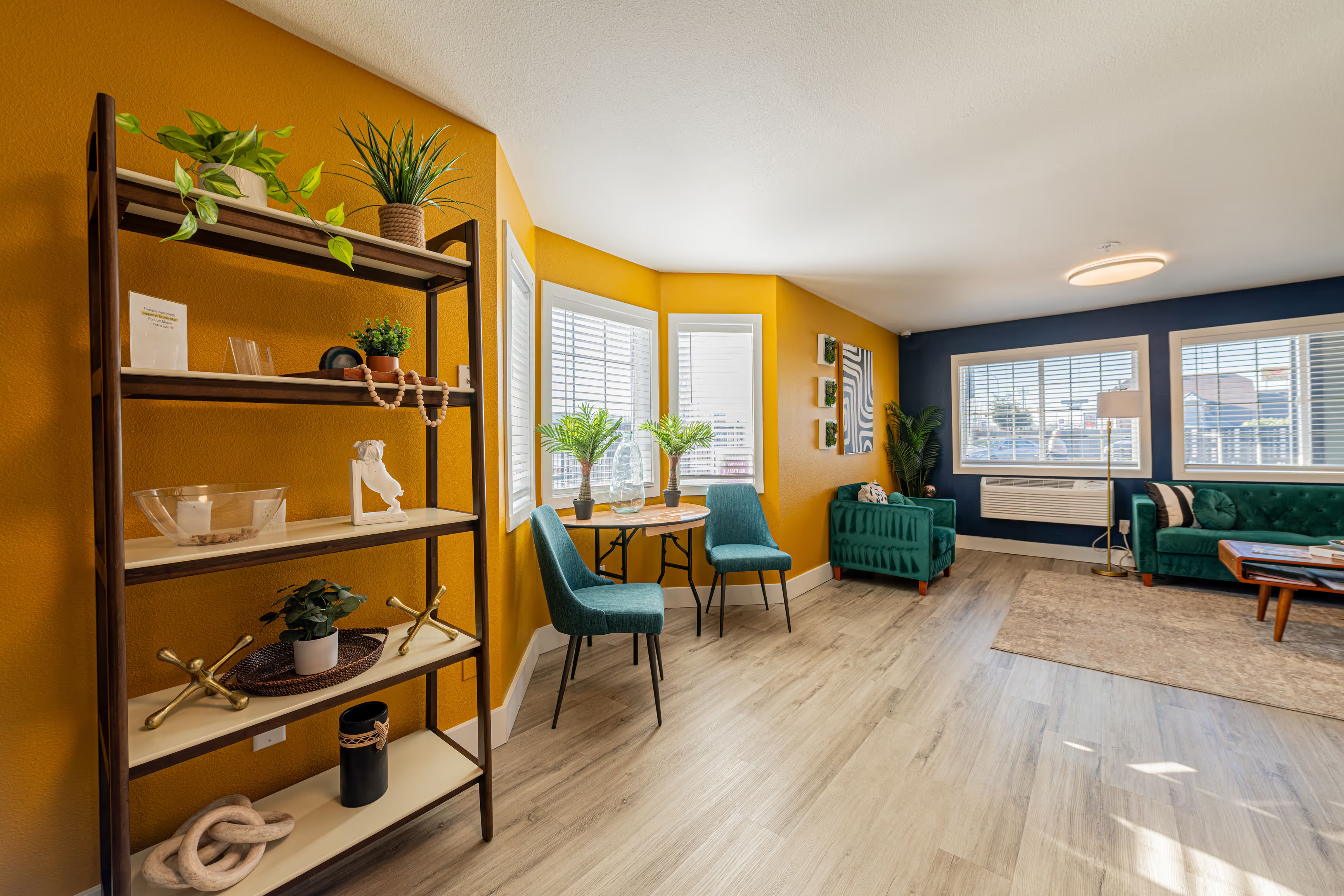
Common Areas: Existing hotel lobbies become resident lounges, coworking spaces, or fitness centers. Conference rooms convert to community amenities. Breakfast areas can become resident gathering spaces. The goal is repurposing existing spaces rather than building new.
Amenity Programming: Today's residents expect amenities beyond basic housing. Conversion projects typically add fitness centers, outdoor spaces, pet-friendly features, package rooms, and technology infrastructure. Hotels often have pools, courtyards, or outdoor areas that adapt well to residential use.
Finishes and Branding: Creating a cohesive residential identity helps differentiate converted properties. Modern finishes, consistent branding, and thoughtful design make conversions feel purpose-built rather than repurposed. Quality finishes at the 50% cost basis allow delivering Class A quality at workforce housing rents.
Renovation Execution
Construction transforms the physical space from hotel to multifamily.
Phased Approach: Most projects renovate by floor or wing, allowing sequential construction that maintains safety and efficiency. Phased renovation also enables rolling lease-up as completed units become available.
Unit Renovation: Interior work typically includes full kitchen installation, bathroom updates, new flooring and paint, lighting upgrades, and finish improvements. Many units need minor modifications to room layouts, closet additions, or HVAC upgrades.
Building Systems: Depending on property condition, projects may upgrade HVAC systems, replace or modify plumbing fixtures, enhance electrical service, add fire suppression systems, and improve building envelopes and insulation.
Life Safety: Residential occupancy requirements differ from hospitality. Conversions typically add sprinkler systems (if not present), install smoke/CO detectors, upgrade exit signage and emergency lighting, ensure ADA accessibility, and meet residential fire code requirements.
Exterior and Curb Appeal: Exterior improvements rebrand the property as residential. Updated signage, landscaping enhancements, entrance modifications, and exterior lighting create residential character and street appeal.
Lease-Up
As units complete renovation, leasing teams begin filling the property.
Marketing Strategy: Successful lease-ups target workforce demographics most aligned with the unit mix and location. Marketing emphasizes affordability compared to new construction, quality finishes and amenities, and convenient locations near employment.
Pricing Strategy: Initial rents balance competitive positioning against nearby properties while supporting the project's return requirements. The 50% cost advantage allows below-market pricing that attracts quality tenants and accelerates lease-up.
Rolling Occupancy: Phased construction enables rolling occupancy where early tenants move in while renovation continues. This approach generates revenue earlier, provides real-world feedback on unit designs and finishes, and creates momentum as prospective tenants see occupied units.
Resident Experience: Property management sets the tone for long-term success. Professional management, responsive maintenance, and community programming create resident satisfaction that drives retention and positive reviews.
Most conversion projects achieve stabilized occupancy (93-95% leased) within 6-12 months of completing renovations, assuming proper market positioning and execution.
What are the top hotel conversion strategies?
The main hotel conversion strategies are: converting hotels into market-rate or workforce apartments, converting them into supportive or transitional housing with public partners, repurposing them as student or specialty housing, and buying conversions that are already finished and stabilized. For investors who want both cash flow and housing impact, the most scalable approach is usually to buy underperforming limited-service or extended-stay hotels below replacement cost and convert them into naturally affordable studio and one-bedroom apartments. That is the strategy Sage Investment Group uses across its portfolio of 32 properties and 2,999 units in six states.
- Workforce apartment conversion (Sage's approach): Sage buys hotels that are typically 100–200 units, in markets with strong job and wage growth, near employment centers and transit corridors. It then adds full kitchens, new finishes, and amenities, and leases at rents typically $300–$500 per month below similar Class A apartments.
- Extended-stay first: Extended-stay hotels with existing kitchenettes usually need less work than traditional hotels, where full kitchens must be added.
- Phased renovation and rolling lease-up: Renovating floor by floor or wing by wing lets finished units start earning rent while construction continues.
- Supportive or transitional housing: Often funded through public programs and partnerships. It has a very different return profile and depends on long-term operating subsidies.
- Pivoting to the demand that exists: Sage's first conversion near the University of Arizona was originally intended as student housing. When COVID-19 disrupted on-campus learning, it pivoted to housing young professionals and people on fixed incomes. See Sage's story.
- Municipal partnership: Working early with city staff on zoning and permitting reduces friction. See the municipal partnership playbook.
Sage Investment Group's offerings are available only to verified accredited investors under SEC Regulation D, Rule 506(c). Past results do not guarantee future outcomes. Read why Sage focuses on conversions or explore investing with Sage.
Timeline: 6-12 Months vs Years for New Construction
The timeline advantage of hotel conversion to apartments represents one of the strategy's most compelling benefits.
Speed Advantage
Immediate Start: Upon closing, conversion projects can begin renovation work immediately. No land clearing, site preparation, or foundation work delays construction. The structure is ready for interior improvements from day one.
Simplified Permitting: While residential use requires permits, converting an existing hotel typically involves simpler approvals than new construction. Many jurisdictions offer expedited review for adaptive reuse projects that add housing supply. Change-of-use permits, building permits for interior renovations, and life safety upgrades generally process faster than new development applications.
Parallel Processes: Design finalization, permitting, and early renovation work often occur simultaneously. While final permits process, teams can complete demolition, order materials, and stage logistics. This parallel processing compresses the overall timeline.
Weather Independence: Because most conversion work occurs inside an existing building envelope, weather delays are minimal compared to ground-up construction. Work can proceed year-round without seasonal interruptions that extend new construction timelines.
Phased Renovation
The phased approach to hotel conversions accelerates returns while managing risk.
Floor-by-Floor: Many projects renovate one or two floors at a time, moving systematically through the building. This approach isolates construction activities, maintains safety, and allows quality control before proceeding.
Wing-by-Wing: Properties with distinct building sections may renovate by wing, completing entire sections before moving to the next. This creates clear boundaries between construction and occupied areas as lease-up begins.
Rolling Completion: As each phase finishes, units become available for immediate leasing. Early occupancy provides several advantages: revenue generation during construction, real-world validation of designs and finishes, and market feedback that can inform remaining phases.
Faster Cash Flow
The compressed timeline means investors start earning returns sooner.
Earlier Stabilization: Reaching stabilized occupancy 18-24 months faster than new construction means cash flow begins sooner. For a project targeting 4–8% cash flow/distributions, this timeline advantage represents significant value.
Reduced Construction Loan Carry: Shorter renovation periods mean less construction loan interest paid before the property generates revenue. Lower interest expense improves overall project returns.
Faster Refinance: Once stabilized, projects can refinance construction debt with permanent financing at attractive terms. Faster stabilization means accessing permanent capital sooner, reducing blended financing costs.
Accelerated Value Creation: The combination of shorter timelines, rolling cash flow, and earlier stabilization creates value faster than new development. For return-focused investors, this acceleration of the value creation curve is as important as the absolute return generated.
Investment Returns in Hotel Conversions
Hotel conversion to apartments can deliver attractive risk-adjusted returns for investors.
Target IRR: 18-25%
Experienced conversion operators target internal rates of return of 18-25% over a typical 5-year hold period. These returns result from several value creation mechanisms:
Basis Advantage: Acquiring and renovating at 50% of replacement cost provides immediate equity. Even at market rents, the spread between acquisition/renovation cost and as-stabilized value creates substantial profit potential.
Rent Growth: Most conversions stabilize with in-place rents below market levels, providing built-in rent growth potential. As leases turn and market rents rise, net operating income grows without additional capital investment.
Cap Rate Compression: Properties that begin as distressed hotels often command higher cap rates reflecting their challenged operating history. As high-quality apartments with proven occupancy, stabilized properties typically trade at lower cap rates, expanding value through multiple compression.
Operational Improvements: Professional multifamily property management increases NOI through effective expense management, optimized occupancy, and ancillary income programs.
The 18-25% IRR target reflects the risk-return profile of value-add real estate: higher than stabilized core multifamily (typically 8-12% IRR) but lower than ground-up development (often targeting 20-30% IRR with higher risk). Hotel conversions balance attractive returns with more predictable execution and shorter timelines than new construction.
Value Creation
Value in conversion projects comes from multiple sources:
Cost Basis: The foundation of conversion returns is the favorable cost basis. Building properties for 50% of market replacement cost creates intrinsic value from day one.
Forced Appreciation: Unlike passive investments that rely on market appreciation, conversions create value through operational improvements. Taking a distressed hotel and transforming it into a quality apartment community generates value regardless of broader market movements.
Cash Flow: Unlike ground-up development where all returns come at exit, conversions generate cash flow during the hold period through quarterly distributions. This ongoing income reduces risk while waiting for disposition and provides tax-advantaged returns through depreciation.
Scale Benefits: Operators executing multiple conversion projects achieve scale advantages through vendor relationships, construction efficiencies, and management platforms. These operational benefits accrue to investors through better execution and lower costs.
Distribution Timeline
A typical hotel conversion investment follows this return pattern:
Year 1: Acquisition and renovation phase with minimal or no distributions as capital is deployed into property improvements.
Year 2: As renovation completes and lease-up progresses, quarterly distributions begin, typically reaching the target annual rate (4–8% cash flow/distributions) by stabilization.
Years 3-5: Stabilized operations with consistent quarterly distributions while the property appreciates through rent growth and NOI improvement.
Year 5+: Disposition generates equity profits when the property sells to a long-term holder at stabilized multifamily valuations.
This return profile—quarterly income plus backend profit—appeals to investors seeking both current income and wealth building. The combination of ongoing distributions and appreciation potential provides balanced returns across the hold period.
Case Study: Successful Conversions
Real-world examples demonstrate how hotel conversions create value while addressing housing needs.
Market Leaders
Sage Investment Group has completed about 30 hotel-to-apartment conversions across six states, transforming 2,999 units. The company's track record demonstrates the viability and scalability of the conversion strategy.
Properties span growth markets including Washington, Texas, North Carolina, South Carolina, Indiana, and Alabama. This geographic diversification provides exposure to different market dynamics while focusing on regions with strong job growth and housing demand.
The conversion approach targets extended-stay and limited-service hotels in the 100-200 unit range located near employment centers and transit corridors. These properties offer the ideal combination of unit size, location, and acquisition pricing to execute the conversion model.
Before and After
Typical conversions transform aging hotel properties into modern apartment communities:
Before: A 150-room extended-stay hotel struggling with 60% occupancy, deferred maintenance, and declining market positioning. The property faces debt maturity with operations unable to support refinancing. The owner seeks an exit strategy.
After: A 140-unit apartment community offering studio and one-bedroom apartments with full kitchens, modern finishes, and resort-style amenities. Renovations include new appliances, flooring, bathrooms, and common area improvements. The property stabilizes at 95% occupancy with rents 20-30% below comparable new construction.
The transformation creates value for all stakeholders. The hotel owner achieves a profitable exit. Investors receive targeted returns through quarterly distributions and backend profits. Most importantly, residents gain access to quality affordable housing that was previously unavailable in the market.
Returns Achieved
While individual project returns vary based on acquisition pricing, renovation costs, and market conditions, successful conversion operators consistently deliver results aligned with target returns:
18-25% Target IRR: Projects executed at 50% of replacement cost, stabilized in 6-12 months, and held for 5 years consistently generate returns in the target range when properly underwritten and executed.
Affordable Rents: The economic structure allows offering rents $300-$500 below new construction—meaningful affordability for workforce tenants—while still achieving attractive investor returns. This alignment of financial returns and social impact makes conversions compelling for impact-conscious capital.
How to Invest in Hotel Conversions
For accredited investors interested in hotel conversion opportunities, several pathways provide access to this strategy.
Syndication Opportunities
Real estate syndication structures allow individual investors to participate in hotel conversion projects alongside experienced sponsors. In a typical syndication:
General Partner: The sponsor/operator (like Sage Investment Group) sources deals, manages acquisitions, oversees renovations, handles property management, and executes the business plan. The GP typically invests 5-10% of equity and receives promoted interests (carried interest) for successful execution.
Limited Partners: Individual accredited investors contribute capital and receive passive returns through quarterly distributions and profit participation at sale. LPs have no management responsibilities but benefit from professional execution and portfolio diversification.
Fund Structure: Some operators offer evergreen funds that deploy capital across multiple projects rather than single-asset syndications. Fund structures provide diversification, ongoing deployment, and professional management while maintaining the tax benefits of direct real estate ownership.
Minimum Investment: Typical minimum investments range from $50,000-$100,000, making institutional-quality deals accessible to qualified individual investors. These minimums allow operators to maintain reasonable investor counts while offering access to high-quality opportunities.
Accreditation Requirements
Hotel conversion syndications are typically structured as SEC Rule 506(c) offerings, which require all investors to be accredited and verify their accredited status.
Income Test: Annual income exceeding $200,000 individually ($300,000 jointly) for the past two years with reasonable expectation of the same income level in the current year.
Net Worth Test: Net worth exceeding $1 million individually or jointly with a spouse, excluding primary residence value.
Professional Certifications: Holders of certain financial professional certifications (Series 7, 65, 82 licenses) qualify as accredited regardless of income or net worth.
Entity Investors: Entities with total assets exceeding $5 million, or entities owned entirely by accredited investors, may also qualify.
Verification typically requires providing tax returns, CPA letters, brokerage statements, or other documentation confirming accredited status.
Next Steps
Investors interested in hotel conversion opportunities should:
1. Research Operators: Identify sponsors with proven conversion track records. Review past projects, investor results, and operational capabilities. Established operators with 10+ completed conversions demonstrate the expertise to execute this specialized strategy.
2. Understand the Business Model: Learn how the conversion process works, what drives returns, and what risks exist. Educated investors make better decisions and can evaluate opportunities effectively.
3. Review Offering Documents: When evaluating specific investments, carefully review Private Placement Memorandums (PPMs), subscription documents, and property-specific business plans. Understand the deal structure, fee arrangements, and terms.
4. Ask Questions: Connect with sponsors to understand their approach, ask about specific properties, and discuss how investments align with your goals. Reputable operators welcome investor questions and provide transparent information.
5. Start Small: Consider beginning with a minimum investment to gain experience with the sponsor and strategy before making larger commitments. Many investors increase allocations after successfully participating in initial projects.
6. Monitor Performance: Track quarterly distributions, review financial reports, and stay informed on portfolio performance. Engaged investors better understand their investments and can make informed decisions on future opportunities.
Conclusion
Hotel conversion to apartments represents one of the most compelling opportunities in real estate investment today. The strategy addresses critical social needs—creating 7.3 million needed affordable homes—while offering investors attractive risk-adjusted returns through quarterly distributions and equity appreciation.
The economics are straightforward: acquire and renovate properties at 50% of new construction costs, complete projects in 6-12 months instead of years, and generate target IRRs of 18-25% while creating naturally affordable housing that serves essential workers and workforce populations.
The market opportunity remains robust. With thousands of hotels facing challenging economics and millions of households needing affordable housing, the supply-demand imbalance will persist for years. Experienced operators with proven conversion expertise and access to capital will continue finding attractive opportunities across growth markets nationwide.
For accredited investors, hotel conversions offer several advantages: exposure to real assets with tangible value, quarterly income distributions, inflation hedging through real property ownership, tax benefits from depreciation, and the satisfaction of creating positive social impact while building wealth.
As adaptive reuse becomes the new standard in multifamily development—with over 181,000 apartments in conversion pipelines in 2026—hotel-to-apartment conversions will continue playing a central role in addressing America's affordable housing crisis while rewarding investors who participate in this transformation.
To learn more about hotel conversion investment opportunities or explore current offerings, connect with experienced operators like Sage Investment Group who specialize in transforming underutilized hotels into vibrant apartment communities. Visit sageinvestment.com to discover how you can participate in solving the affordable housing crisis one hotel at a time.
Important Disclosures
This article is for informational purposes only and does not constitute an offer to sell or a solicitation of an offer to buy any securities. Any such offer will be made only through a confidential private placement memorandum or other definitive offering documents to qualified prospective investors. Investments discussed herein are offered exclusively to accredited investors in accordance with Regulation D under the Securities Act of 1933.
Past performance is not indicative of future results. All projections, forecasts, and return targets are provided for illustrative purposes only and are not guarantees of future performance. Investing in real estate involves significant risks, including the potential loss of principal. You should consult your own legal, tax, and financial advisors before making any investment decision.
For more information, please review Sage Investment Group's Privacy Policy.


