

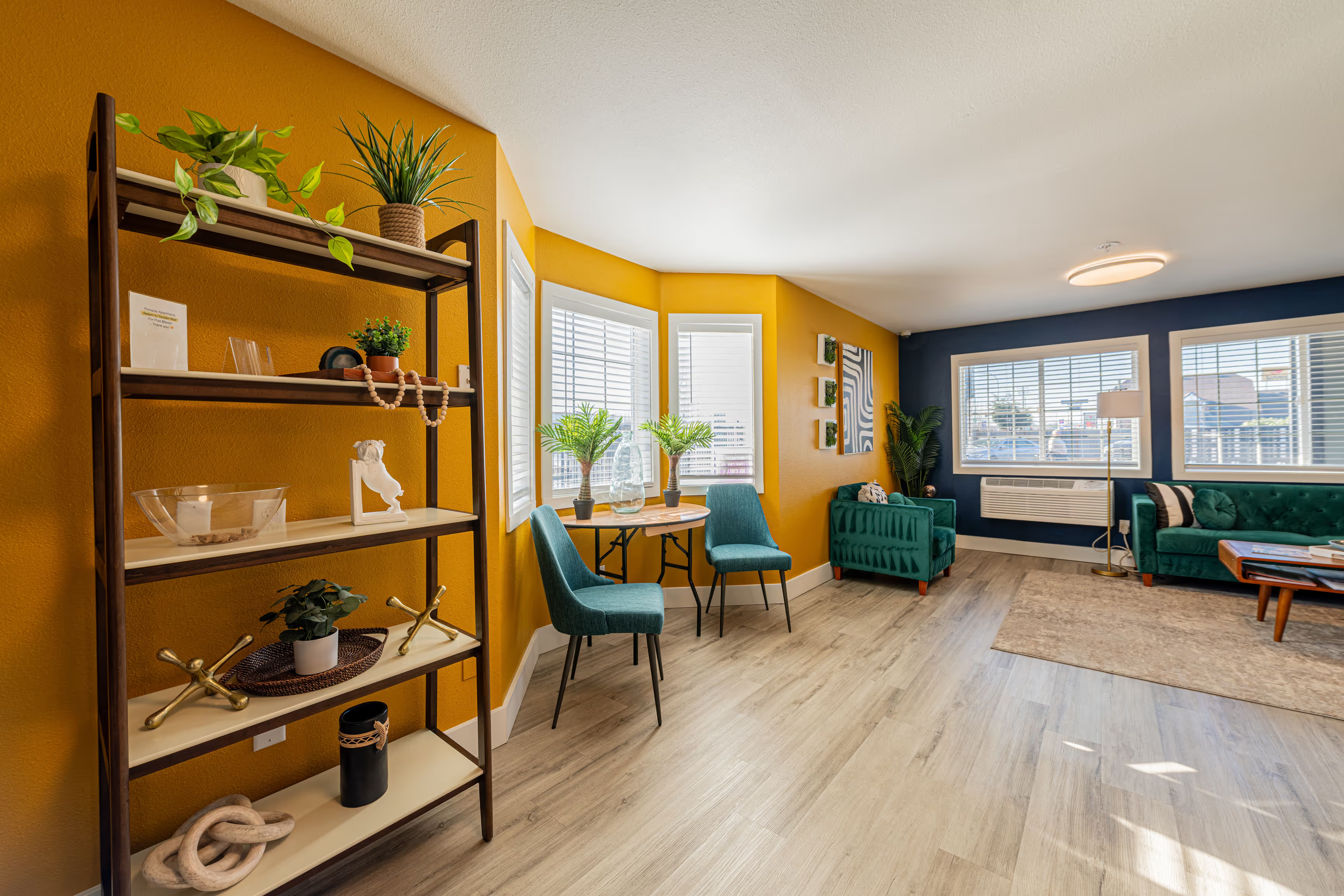
Hotel to Apartment Conversion: Everything You Need to Know
Short answer: Hotel-to-apartment conversion is the adaptive reuse of an existing hotel as rental housing. The owner buys the hotel, adds kitchens and residential systems, and leases the rooms as studios and one-bedroom apartments. Sage Investment Group, based in Kirkland, Washington, specializes in this strategy and has built a portfolio of 32 properties and 2,999 units across six states through about 30 conversions. Its conversions typically take 6–12 months.
Hotel-to-apartment conversion has emerged as one of the most compelling real estate investment strategies in 2026. With thousands of underperforming hotels across the United States and an acute housing shortage estimated at 7.3 million units, converting hotels into residential apartments creates a rare alignment between strong financial returns and genuine social impact.
This comprehensive guide covers everything investors need to know about the hotel-to-apartment conversion process—from identifying viable properties to understanding the renovation timeline, costs, and return potential that make this asset class uniquely attractive for accredited investor real estate portfolios.
Why Hotels Convert Well to Apartments
Hotels and apartments share fundamental structural DNA that makes conversion far more practical and cost-effective than ground-up construction. Both building types feature individual units arranged along corridors, centralized mechanical systems, shared common areas, and parking infrastructure. This structural similarity means the conversion process focuses primarily on unit reconfiguration rather than fundamental building redesign.
Hotel rooms already contain plumbing roughed in for bathrooms, electrical systems sized for individual unit metering, and HVAC infrastructure designed for room-by-room climate control. Converting these spaces into studio and one-bedroom apartments typically requires adding kitchenette facilities, upgrading finishes, and reconfiguring some rooms to create larger units—work that can be completed in 6–12 months versus the 2-4 years required for new construction.
The economics are equally compelling. Hotels can often be acquired at approximately 50% of replacement cost, meaning investors gain a finished building shell at a fraction of what it would cost to build from scratch. When combined with renovation costs that typically run 30-40% below new construction costs per unit, the total investment creates an immediate equity position that provides downside protection.
The Conversion Process Step by Step
Property Identification and Acquisition
Not every hotel makes a good conversion candidate. The ideal property features a location in a market with strong apartment demand, a building structure that accommodates residential floor plans, adequate parking, and an acquisition price that supports target returns after renovation costs. Properties with exterior corridors, concrete or steel construction, and at least 200 square feet per room offer the best conversion economics.
Sage Investment Group evaluates hundreds of potential acquisitions annually, applying rigorous underwriting criteria developed through about 30 hotel conversions across six states. This experience provides critical insight into which properties will convert efficiently and which present hidden challenges.
Due Diligence and Entitlements
Before closing on any acquisition, thorough due diligence addresses zoning compliance, building code requirements for residential occupancy, environmental assessments, and structural engineering reviews. Many municipalities actively encourage hotel-to-apartment conversions through expedited permitting and zoning flexibility, recognizing the housing benefits these projects deliver.
The entitlement process varies significantly by market. Some jurisdictions allow hotel-to-residential conversion by right, while others require special use permits or zoning variances. Understanding the local regulatory landscape before acquisition prevents costly delays.
Renovation and Construction
The renovation phase transforms hotel rooms into apartment units. Typical scope includes installing kitchenettes (countertops, cabinetry, sink, microwave, and often a cooktop), upgrading flooring and finishes, replacing or refinishing bathrooms, installing in-unit washers and dryers where feasible, and creating common area amenities that appeal to residential tenants.
Unit mix optimization is a critical design decision. Most conversions create a combination of studios (from single hotel rooms) and one-bedrooms (by combining adjacent rooms). The optimal mix depends on local market demand, building configuration, and target rental rates. For more on the financial aspects, see our analysis of hotel conversion costs and return projections.
Lease-Up and Stabilization
Once renovation is complete, the property enters the lease-up phase. Well-located conversions in markets with strong demand often achieve stabilized occupancy (90%+) within 3-6 months. The naturally affordable rent points—typically 20-30% below comparable new construction—create strong demand from workforce housing tenants who represent a deep and stable rental pool.
Investment Returns and Structure
Hotel-to-apartment conversions are typically structured as real estate syndications, pooling capital from accredited investors to fund acquisition and renovation. The general partner (sponsor) manages all aspects of the project while limited partners provide capital and receive passive income.
Target returns for well-executed conversions typically include annual cash-on-cash distributions of 6-8% once stabilized, with overall project IRRs targeting 18-25% over a 5-year hold period. These returns benefit from multiple value-creation levers: below-market acquisition cost, forced appreciation through renovation, operational income from rents, and tax advantages including accelerated depreciation through cost segregation studies.
For investors interested in using tax-advantaged accounts, self-directed IRA real estate investing and investing IRA funds in real estate provide pathways to participate in hotel conversion syndications with tax-deferred or tax-free growth.
Why This Strategy Works in 2026
Several converging trends make hotel-to-apartment conversion particularly attractive in the current market. The affordable housing shortage continues to intensify, with demand far outpacing new supply in most major markets. Construction costs for new development remain elevated, making conversion's cost advantage even more pronounced. And a large inventory of hotels—particularly those built in the 1980s-2000s that are approaching the end of their useful life as hospitality assets—provide a deep pipeline of acquisition opportunities.
The strategy also offers meaningful impact investing credentials. Each conversion creates naturally affordable housing without government subsidies, reduces construction waste through adaptive reuse, and revitalizes properties that may have become neighborhood liabilities as underperforming hotels.
Choosing the Right Conversion Partner
Success in hotel-to-apartment conversion depends heavily on sponsor experience and execution capability. Key factors to evaluate include the number of completed conversions, consistency of returns across projects, vertical integration (in-house construction, property management, and asset management), and market expertise in target geographies.
Investors exploring this space should also understand the broader landscape of hotel-to-apartment conversion companies to compare approaches, track records, and investment structures. Look for sponsors who invest their own capital alongside investors and have demonstrated performance through multiple market cycles.
Getting Started
Hotel-to-apartment conversion offers accredited investors a unique combination of strong returns, tangible assets, and social impact. Whether you're building your first alternative investment allocation or expanding an existing real estate portfolio, this asset class deserves serious consideration.
Sage Investment Group has pioneered the hotel-to-apartment conversion model, completing about 30 conversions across six states. Our vertically integrated platform handles every aspect of the conversion process—from acquisition through renovation, lease-up, and ongoing management.
Explore current hotel conversion investment opportunities with Sage Investment Group.
For how the value gap between hotel and apartment pricing works, see Cap Rate Arbitrage in Hotel-to-Apartment Conversions.
Important Disclosures
This article is for informational purposes only and does not constitute an offer to sell or a solicitation of an offer to buy any securities. Any such offer will be made only through a confidential private placement memorandum or other definitive offering documents to qualified prospective investors. Investments discussed herein are offered exclusively to accredited investors in accordance with Regulation D under the Securities Act of 1933.
Past performance is not indicative of future results. All projections, forecasts, and return targets are provided for illustrative purposes only and are not guarantees of future performance. Investing in real estate involves significant risks, including the potential loss of principal. You should consult your own legal, tax, and financial advisors before making any investment decision.
For more information, please review Sage Investment Group's Privacy Policy.


