
Hotel-to-Housing Conversions: The $50,000-$150,000 Per Unit Cost Breakdown
Understanding the cost structure of hotel-to-housing conversions requires moving beyond headline numbers into the specific line items that determine project economics. A project that costs $100,000 per unit requires different capital strategy, financing approach, and timeline than one costing $150,000 per unit. The difference between projects landing in the $50,000-$75,000 range versus $100,000-$150,000 range reflects fundamental property differences and conversion requirements.
The per-unit costs break into three distinct tiers, each with specific property profiles and upgrade requirements. Understanding these tiers helps practitioners evaluate whether specific properties fit their capital constraints and return targets.
Low-End Conversions: $55,000-$75,000 Per Unit
Low-end conversions are relatively rare because they require specific property characteristics: newer extended-stay hotels with existing kitchenettes, recent HVAC system installations, adequate electrical infrastructure, and minimal major mechanical systems replacement.
Extended-stay hotels are natural conversion candidates because kitchenette infrastructure already exists, reducing major installation costs. A property built within the last 10-15 years with HVAC systems installed in the past 5 years and electrical systems that don't require substantial upgrades can land in this lowest cost tier.
Projects in this range still require full interior refresh: paint, flooring, cabinet replacement, appliance upgrades, bathroom refresh. They require electrical circuit upgrades, though not complete panel replacement. They require code compliance upgrades and fire suppression system modifications. But they avoid the major infrastructure replacement costs that define higher-cost projects.
These conversions are unusually profitable because the per-unit cost difference between $65,000 and $100,000 is $35,000 per unit. On a 100-unit conversion, that's $3.5 million in total project cost difference—a fundamental impact on return profile and financing requirements.
Mid-Range Conversions: $75,000-$100,000 Per Unit
The majority of hotel conversions land in the mid-range tier. These projects address typical hotel properties: 15-35 year old construction, systems that require replacement or substantial upgrade, and standard-complexity conversion requirements.
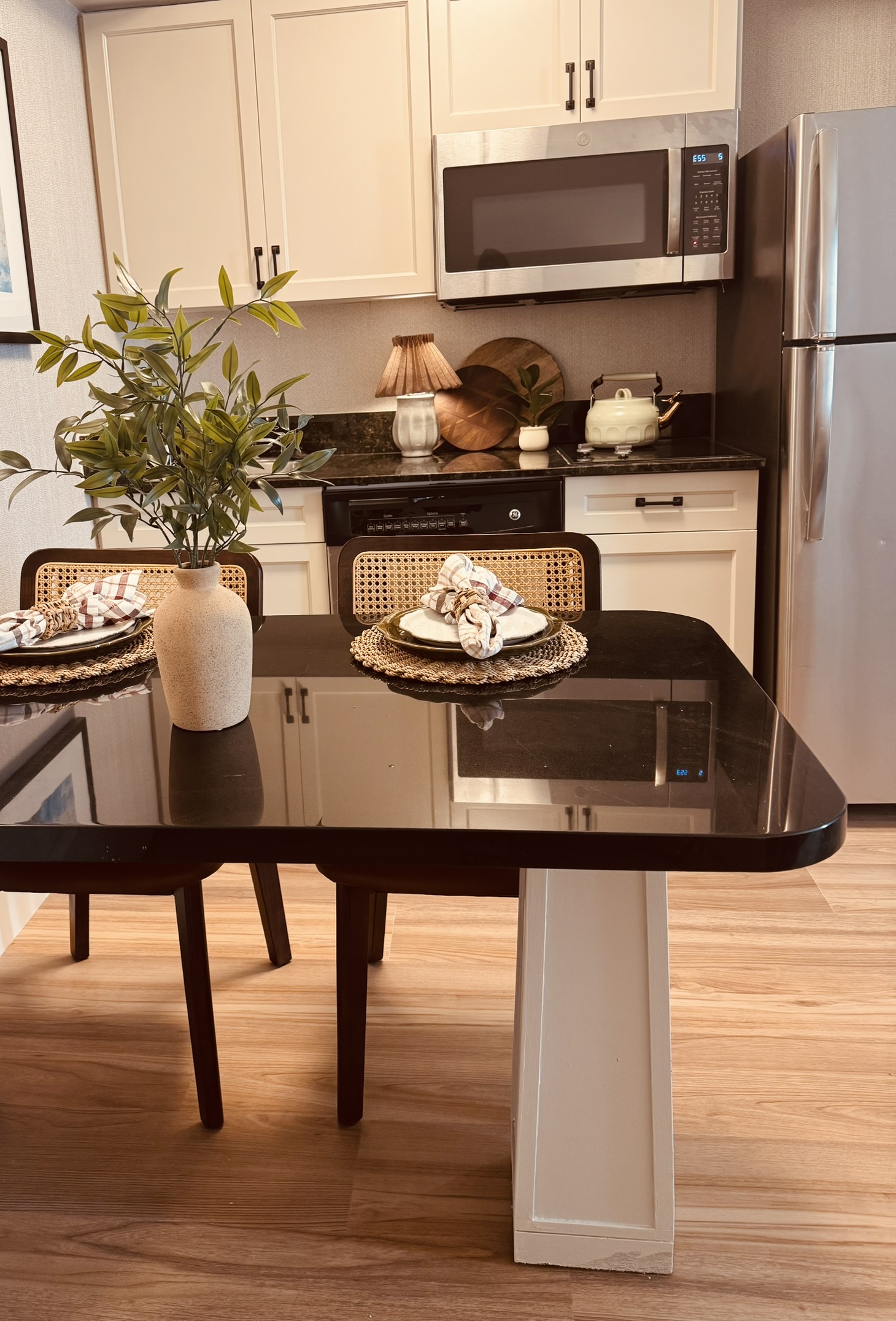
Kitchen installation represents a major cost component in mid-range projects. Full kitchens—range, microwave, refrigerator, sink, cabinets, countertop, exhaust hood—require plumbing runs, electrical circuits, and ventilation infrastructure. Budget $3,500-$6,000 per unit for full kitchen installation in mid-range conversions.
Electrical upgrades are substantial. A 100-unit conversion typically requires 400-700 new electrical circuits. Older hotel properties often have undersized electrical service, inadequate panel capacity, and wiring that doesn't meet modern code. Complete electrical system upgrade including panel replacement, circuit distribution, and code compliance represents $4,000-$8,000 per unit depending on property age and existing infrastructure.
Plumbing and water infrastructure require careful assessment. Properties built before 1980 often have cast iron waste stacks and deteriorated water lines. Galvanized plumbing corrodes and fails. Adding domestic water, waste, and vent lines to apartment configurations requires either complete replacement or selective line replacement depending on property condition. Budget $2,500-$5,000 per unit for plumbing infrastructure.
HVAC replacement is common in mid-range projects. Properties 20+ years old need new mechanical systems. Window units are replaced with central systems or mini-split heat pumps. Ductwork is installed or upgraded. Budget $2,500-$4,500 per unit for HVAC replacement.
Fire suppression system upgrades are legally required in residential conversions. Hotels often have basic fire suppression; residential code requires more comprehensive systems. Budget $4-$8 per square foot, or roughly $800-$3,200 per unit depending on unit size and system requirements.
The 50/50 rule commonly applies in mid-range conversions: approximately $15,000 per unit for visible interior work (finishes, fixtures, aesthetics), and $15,000-$40,000 per unit for invisible infrastructure (electrical, plumbing, HVAC, mechanical systems). Visible work directly impacts resident perception and satisfaction; invisible work is equally critical but less apparent.
High-End Conversions: $100,000-$150,000 Per Unit
High-end conversions address older properties requiring substantial infrastructure replacement. Buildings constructed before 1980, with deferred maintenance, outdated mechanical systems, and complex code compliance issues land in this tier.
These projects often require complete mechanical system replacement: new electrical service, new HVAC infrastructure, new plumbing systems. Structural issues requiring seismic retrofitting, foundation repairs, or exterior envelope rehabilitation add significant cost. Environmental issues—soil contamination, asbestos abatement, PCB-containing equipment removal—drive costs higher.
Energy code compliance represents a cost trap that catches inexperienced operators. Window replacement, insulation upgrades, and lighting system modifications required for energy code compliance are invisible to residents but necessary for permitting. Budget $1,000-$3,000 per unit for energy code compliance.
Older buildings often have irregular floor plans, smaller rooms, and inefficient corridor layouts. Room reconfiguration to achieve standard unit sizes costs additional capital. Properties with non-structural element complications—architectural features that obstruct standardization, complex site constraints, difficult municipal relationships—run into unexpected costs.
Critical Cost Components: The Details That Matter
Kitchen installation spans $3,500-$6,000 per unit and includes range, microwave, refrigerator, sink with faucet, cabinetry, countertop, and exhaust hood. These are quality residential appliances, not economy units. Installation includes rough-in (plumbing, electrical, gas), finished installation, and integration with surrounding finishes.
Electrical circuit expansion is the single most complex mechanical upgrade. A 100-unit building might require 400-700 new circuits distributed throughout the property. Older hotels have undersized electrical service—50-100 amp service insufficient for modern residential loads. Upgrade to 200-400 amp service, replacement of main panels, subpanel installation, and circuit distribution runs $4,000-$8,000 per unit. Electrical equipment lead times are critical—order immediately upon project approval because long-lead items can delay construction.
Plumbing upgrades require careful phasing. Waste stack replacement is expensive; selective line replacement for domestic water and fixture roughing saves capital without compromising function. Budget $2,500-$5,000 per unit depending on extent of replacement needed.
HVAC replacement depends on climate zone and existing infrastructure. Mild climates might use mini-split heat pumps ($2,000-$3,500 per unit); cold climates require more substantial systems ($3,500-$5,000 per unit). System design must accommodate unit-by-unit zoning rather than centralized control.
Fire suppression systems cost $4-$8 per square foot. A 400-square-foot unit requires $1,600-$3,200 in sprinkler system investment. Multiplex systems that serve entire floors are more economical than unit-specific systems.
Project Economics: Why These Cost Tiers Matter
The per-unit cost difference between tiers represents fundamental differences in project financing and profitability. A $7.5 million project (100 units at $75,000) versus a $10 million project (100 units at $100,000) requires different financing structures, different equity contributions, and different return expectations.
Projects costing less than $80,000 per unit with rents at $1,000-$1,200 achieve strong cash-on-cash returns within 3-5 years. Projects at $120,000+ per unit require longer hold periods or larger scale to achieve comparable returns. The cost tier determines which investors have realistic returns and which deals are unrealistic for specific capital sources.
Comparison to New Construction
New construction per-unit costs of $250,000-$500,000 reflect the full cost of building from grade. Adaptive reuse at $50,000-$150,000 per unit reflects using existing infrastructure. That 3-5x cost difference fundamentally explains why conversion is becoming the dominant development pathway. The economics are simply incomparable—conversions at $75,000-$100,000 per unit deliver rents at $1,000-$1,200/month; new construction at equivalent rents is economically unviable without substantial subsidies.
Understanding these cost tiers allows investors and operators to evaluate properties realistically, budget capital accurately, and predict financial outcomes based on property condition and required upgrades. The difference between a $70,000-per-unit project and $130,000-per-unit project is transformative for returns, financing capability, and timeline to stabilization.
Related Articles
- Hotel Conversion Case Study: $8.5M Purchase to $18.9M Sale in 19 Months
- Hotel Plumbing, Electrical, and HVAC: The Hidden Costs That Kill Conversion Deals
- Hotel Conversion Financing: Construction Loans, Bridge Debt, and Capital Stacking
- Cap Rate Arbitrage: How Hotel-to-Apartment Conversions Create 50-70% Value Increases
- Adaptive Reuse Real Estate: Why Converting Existing Buildings Beats New Construction
For the full process behind these costs, see the hotel-to-apartment conversion guide.