Hotel Conversion Case Study: $8.5M Purchase to $18.9M Sale in 19 Months
The conversion of the Sahara hotel in Tucson, Arizona demonstrates the complete cycle of hotel-to-housing transformation: acquisition, renovation, market repositioning, and successful exit. The project achieved a 68.8% per-unit value increase and 120%+ equity return in 19 months by executing disciplined technical conversion work and recognizing an underserved market demand.
Property Overview and Acquisition
The Sahara Apartments (formerly Sahara Hotel) is a 175-unit economy hotel property located in central Tucson, Arizona. The property was constructed in the 1960s as a full-service hotel with standard operating systems for hospitality use: PTAC heating and cooling, basic electrical service, minimal kitchen infrastructure, and hospitality-grade plumbing designed for transient occupancy.
Acquisition occurred in early 2019 when the property was generating significant operating losses and had accumulated substantial deferred maintenance. The seller was motivated by years of declining occupancy rates, increasing competition from newer chain hotels, and the substantial capital requirements needed to bring the aging property to modern hospitality standards. The purchase price was $8.5 million, or $70,833 per unit, representing a significant discount to stabilized apartment market values in Tucson.
At purchase, the Sahara generated minimal positive cash flow. Occupancy was volatile due to the hotel's positioning in a saturated market. The transaction essentially acquired 175 units of real estate at a substantial discount, with no operating profit and carrying substantial liability in the form of deferred maintenance and obsolescence.
Scope of Renovation Work
The renovation budget was $2.7 million, or $22,500 per unit. This scope addressed the essential requirements to convert hotel rooms into residential apartments while maintaining project economics.
Kitchen Installation was the most significant single-unit renovation. Each of the 175 rooms required full kitchen installation: new cabinetry, countertops, sink, faucet, dishwasher, refrigerator, microwave, and range. Individual room kitchens, with dishwasher and full cooking capability, transformed the property from transient hotel to permanent residential housing. This alone costs $4,000-$6,000 per unit and represents the difference between hotel and apartment market positioning.
Flooring, Fixtures, and Finishes throughout each unit were updated: new carpet or luxury vinyl plank in living areas, new tile in bathrooms, updated light fixtures, and fresh paint. Hotel carpeting shows wear patterns from high foot traffic. Residential tenants expect uniform, clean finishes. This refresh, essential for lease-up, added $3,000-$4,000 per unit.
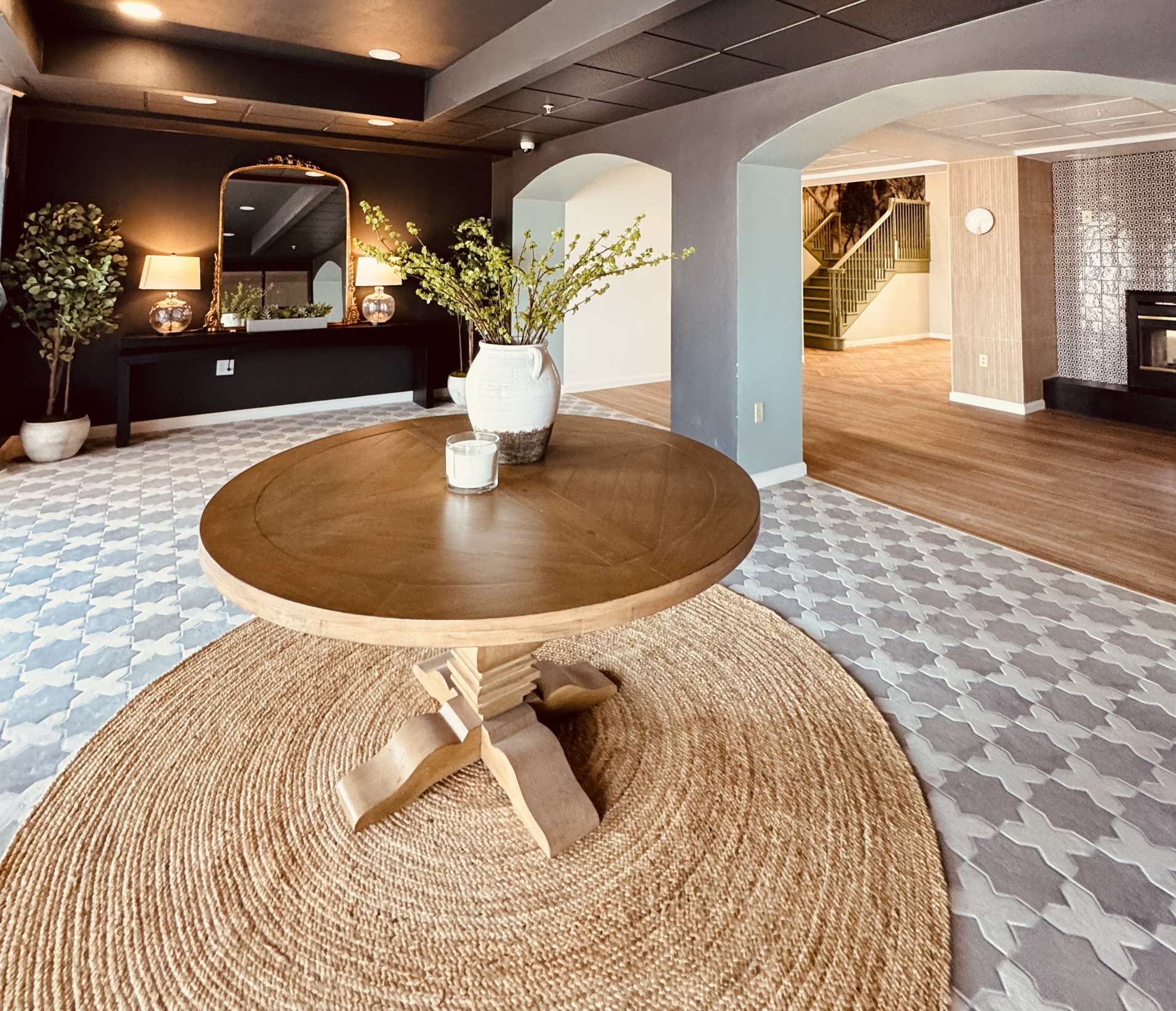
Common Area Improvements included renovating the lobby into a residential leasing office and amenity space, upgrading hallways with new paint and lighting, installing laundry facilities, and creating a community room. These improvements were modest but necessary for market positioning: professional leasing operation, functional amenities, and a sense of community ownership.
Building Systems Work included HVAC unit replacement, electrical system upgrades to accommodate new kitchen and laundry loads, plumbing work to connect new kitchens and update bathrooms, and life safety upgrades including fire alarm and sprinkler system updates. This represents 20-25% of total renovation cost and is largely invisible to tenants but essential for code compliance and system reliability.
Market Positioning and Tenant Profile
Initial market strategy targeted short-term corporate housing: temporary workers, business travelers, and corporate relocation. This market historically paid premium rates for furnished, flexible-term apartments in central locations.
After initial lease-up conversations, the team recognized that workforce housing for permanent residents represented a stronger and larger market opportunity. Tucson has substantial demand from essential workers: nurses at Banner University Medical Center and Tucson Medical Center, teachers at Tucson Unified School District, service workers, and young professionals. These residents sought permanent housing at affordable rates in central Tucson.
The property repositioned as workforce housing serving residents earning $35,000-$65,000 annually. Unit mix emphasized studios and one-bedroom configurations, with rents positioned 15-25% below comparable market-rate apartments. This positioning created immediate market demand and generated rapid lease-up.
Tenant Demographics reflected workforce composition: 35% healthcare workers, 20% teachers and education staff, 18% service industry workers, 15% young professionals, and 12% other employment categories. Average household income was $47,500 annually. Tenant screening required employment verification, credit check, and reference verification. No subsidized housing vouchers or homeless service programs were accepted.
Occupancy Performance after conversion achieved 99.6% occupancy within three months of lease-up. Pent-up demand from workforce housing market segment, combined with professional on-site management and well-maintained facilities, created stable, high-occupancy operations. Average lease tenure exceeded 2.5 years, demonstrating that affordable market-rate housing generates resident stability.
Timeline: 18 Months to Stabilization
Project timeline from acquisition to stabilized operations was 18 months. This included: 2 months pre-acquisition due diligence and closing, 6 months renovation and lease-up, 4 months stabilization and operations, 6 months additional stabilization before exit. Compressed timelines are possible but add cost (rush fees, higher labor rates). This timeline allowed quality execution while maintaining investor pace.
Exit and Value Creation
The property was sold after 19 months of ownership for $18.9 million, or $157,500 per unit. This represents a per-unit value increase of 68.8% in 19 months.
Total Value Increase: $18.9M purchase price minus $8.5M acquisition price equals $10.4M value creation. Per unit: $157,500 exit price minus $70,833 acquisition price equals $86,667 per unit value increase.
Equity Return: Total invested capital was approximately $8.5M acquisition plus $2.7M renovation equals $11.2M total investment. Equity profit was $18.9M minus $11.2M equals $7.7M profit. This represents 120%+ return on equity in 19 months, or 75%+ annualized return.
Value Creation Sources: Approximately 50% of value creation came from cap rate compression (the market paid a lower cap rate for stabilized residential apartments than it had implicitly paid for the distressed hotel). Approximately 50% of value creation came from NOI (net operating income) growth: the property's annual cash flow increased from negative operating loss to $1.8M+ annual NOI through renovation and repositioning.
Supporting Case Studies: Tacoma and Fife Properties
Hosmer Street Apartments, Tacoma, Washington demonstrates the crime reduction impact that conversions deliver. Prior to conversion, the property (operating as a low-rent hotel) generated 200+ police calls monthly and was classified as a nuisance property by Tacoma Police Department. The primary criminal activity involved drug dealing and prostitution in unoccupied rooms. After conversion to permanent workforce housing, overall crime within a six-block radius fell 40% within 12 months. Violent crime was eliminated entirely. Police officers who visited the property weekly on responding to calls stopped coming entirely: the reduction in incidents was so dramatic that routine patrol became unnecessary.
This pattern—dramatic crime reduction after conversion—repeats across the portfolio. Properties that generate community fear as crime hubs become stable community assets after conversion. This transformation should be communicated clearly to municipal officials and community members during approval processes.
Pinnacle Apartments, Fife, Washington involved a fire-damaged property that was deemed uneconomical to renovate as a hotel. The insurance settlement, combined with the structure's viability as a residential conversion, made transformation into permanent housing economically viable. The property now serves workforce housing in Fife and has achieved 97%+ occupancy.
Key Insights and Lessons
Market positioning matters more than renovation quality. The Sahara succeeded not because renovation was exceptionally premium (it was deliberately efficient and practical) but because the property was repositioned to serve an underserved market. Workforce housing for essential workers earning $35,000-$65,000 faces extreme supply shortages in most markets. Recognizing and serving that market creates lease-up velocity and rent growth.
Value creation splits between operational improvement and market transition. The 50-50 split between cap rate compression and NOI growth suggests that both factors matter. Properties that show operational improvement (higher occupancy, better management) command better multiples. Properties in strong housing markets benefit from market appreciation. Success requires both.
Timeline matters for return calculations. 19-month projects generate 75%+ annualized returns. 36-month projects with identical dollar returns generate 35%+ annualized returns. Execution speed directly impacts return profile. Every month of delay reduces annualized return.
Essential worker housing is recession-resistant. Healthcare workers, teachers, and service workers maintain employment through economic downturns. Workforce housing avoids the cyclicality of development for affluent markets.
The Sahara Apartments demonstrates that hotel-to-housing conversion, when executed against properly-sized markets and with disciplined financial management, generates compelling returns while solving real community housing shortages. The 68.8% per-unit value increase in 19 months is not exceptional in strong conversion markets—it's representative of what disciplined execution against the right property delivers.
Related Articles
- Cap Rate Arbitrage: How Hotel-to-Apartment Conversions Create 50-70% Value Increases
- Hotel-to-Housing Conversions: The $50,000-$150,000 Per Unit Cost Breakdown
- Why Hotel Conversions Are Rated 8.5/10 on the Complexity Scale (And Why That's Good for Returns)
- Real Estate Investments with 18-25% Target Returns: Comparing Asset Classes
- Hotel Conversion vs Ground-Up Development: Cost, Timeline, and Return Comparison


