
Hotel Conversion vs Ground-Up Development: Cost, Timeline, and Return Comparison
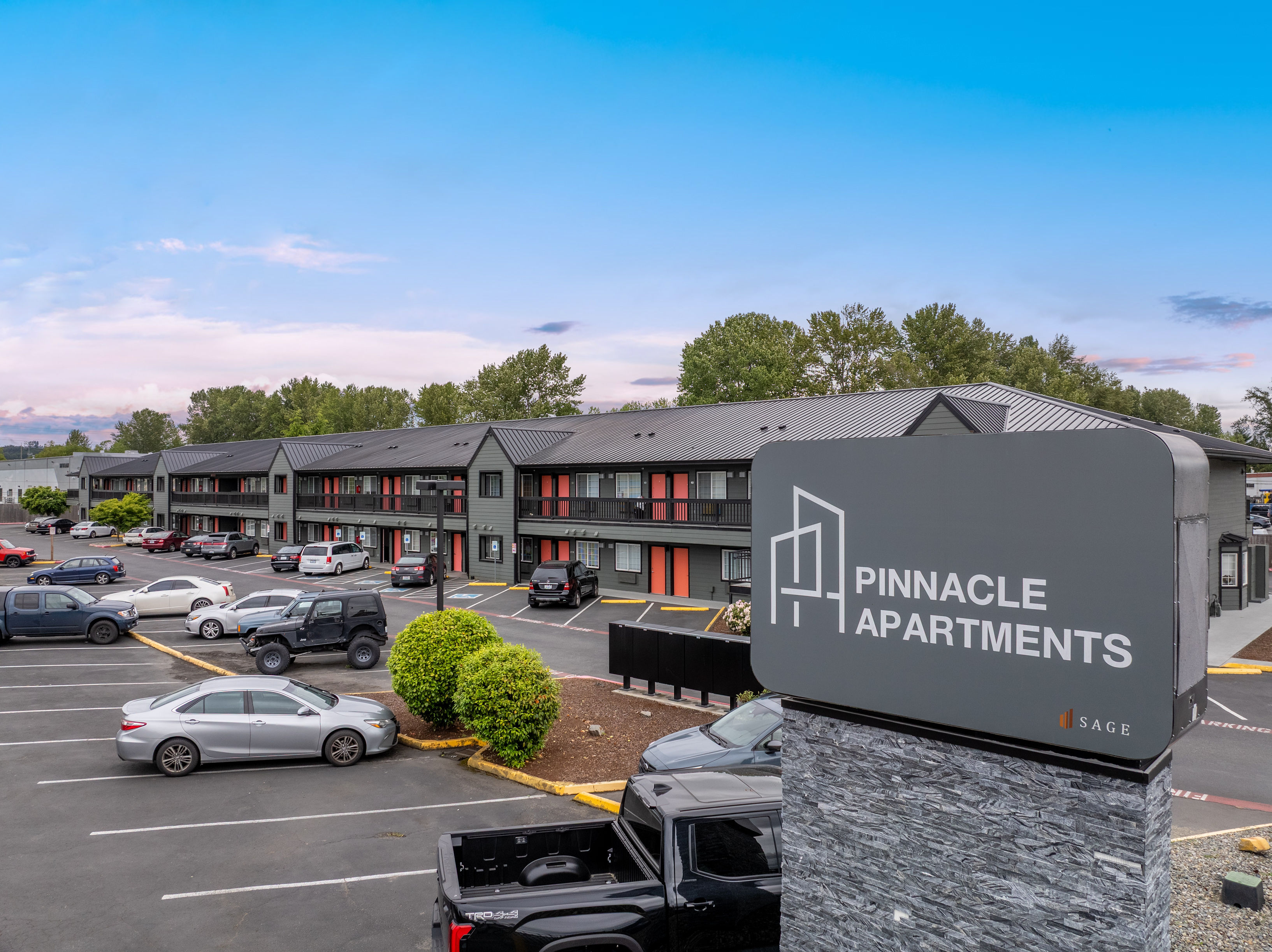
Short answer: A hotel conversion reuses a building that already stands, so it usually reaches rental income sooner than ground-up development and avoids much of the structural construction risk. It adds different risks, including change-of-use approvals, building condition, and whether hotel rooms make good apartments. Sage Investment Group has built a portfolio of 32 properties and 2,999 units across six states through about 30 conversions. Its conversions typically take 6–12 months.
The question I hear most from investors evaluating our projects is straightforward: why convert hotels when you could build new? It's a fair question. Ground-up development is a proven model with decades of institutional track record. Conversions, by comparison, are still unfamiliar to most capital allocators.
The answer comes down to three numbers: cost per unit, time to first rent, and risk-adjusted return. On all three metrics, hotel conversions outperform new construction for workforce housing—not marginally, but substantially. Here's the data.
Cost Per Unit: $50K-$150K vs $250K-$500K
The cost advantage is the most obvious differentiator. Hotel-to-apartment conversions typically cost $50,000 to $150,000 per unit, depending on the scope of work required. Ground-up multifamily construction in most U.S. markets runs $250,000 to $500,000 per unit—and in high-cost coastal markets, significantly more.
That cost gap exists because conversions start with a standing structure. The foundation, framing, roofing, parking, and site work are already complete. You're renovating, not building. The structural shell—which represents 40-60% of new construction cost—is already in place.
Conversions do require meaningful investment in mechanical systems (plumbing, electrical, HVAC), unit reconfiguration, fire suppression upgrades, and finish work. These costs vary significantly by building condition and local code requirements. But even in complex conversions requiring full kitchen installations and electrical upgrades, the total cost rarely exceeds $150,000 per unit—still 40-70% below new construction.
Timeline: 6-12 Months vs 36-48 Months
Time is money in development, and the timeline difference is dramatic. A hotel conversion from acquisition to stabilized occupancy typically takes 6-12 months. Ground-up development from land acquisition to stabilized occupancy takes 36-48 months—and that assumes no permitting delays, which is optimistic in most municipalities.
Why the difference? Conversions skip four of the most time-consuming steps in development: land entitlement, design development, foundation and structural construction, and extended permitting. In states like Washington, where legislation has eliminated use-change permit requirements for hotel conversions, the permitting timeline compresses even further.
That 24-30 month advantage matters enormously for investor returns. Earlier stabilization means earlier cash flow, earlier refinancing, and earlier return of capital. An investor in a conversion project might see their first distribution within 18 months of commitment. An investor in ground-up development might wait 48 months.
Risk Profile: Different Categories of Uncertainty
Both strategies carry risk. The risk profiles, however, are fundamentally different.
Ground-up development risk is concentrated in entitlement and construction. Will the city approve the project? Will construction costs hold? Will the subcontractor market cooperate? Will interest rates remain favorable over a 36-month build? These risks are well-understood and can be modeled with high confidence—experienced developers report 95%+ certainty on pro forma economics.
Conversion risk is concentrated in hidden conditions and execution complexity. What's behind the walls? Will the plumbing system support residential use? Are there environmental issues (asbestos, lead paint) that weren't visible during inspection? Even experienced conversion operators report only 55-60% certainty on project pro formas—a significant gap from ground-up certainty levels.
That lower certainty is precisely what creates the return premium. Institutional capital, which requires high certainty, avoids conversions. That leaves the field open for operators who've developed the expertise to manage conversion-specific risk—and the pricing reflects the reduced competition.
How do hotel-to-apartment conversions reduce risk compared with new construction?
Hotel-to-apartment conversions reduce some of the biggest risks of new construction rather than eliminating risk altogether. Because the building already exists, there are no land entitlements to obtain and no multi-year construction to finance, so the project reaches rental income sooner. And because the cost basis is lower, the rent needed to break even is lower too. The remaining risk is concentrated in hidden building conditions and execution, which experienced operators manage through due diligence and repeatable renovation processes. Sage Investment Group reports completing conversions in 6–12 months, compared with the 2–4 years typical for new builds, at about 50% of replacement cost.
- Shorter exposure window: Fewer months under construction means less exposure to rising interest rates, rising material and labor costs, and market shifts before the property earns income.
- Lower break-even rent: With a lower all-in basis, a property can stay competitive even if market rents soften. Sage's units typically rent for $300–$500 less per month than similar Class A apartments.
- Rolling lease-up: Renovating in phases lets finished units start earning rent while work continues on the rest of the building.
- Demand at the right price point: Workforce rents serve a large pool of renters priced out of new construction.
- Where risk remains: What's behind the walls, code upgrades, and approvals can surprise even experienced operators. See why conversions are complex.
- Portfolio diversification: Sage's investor distributions are backed by the performance of its whole portfolio of 32 properties, rather than one asset.
Sage Investment Group's offerings are available only to verified accredited investors under SEC Regulation D, Rule 506(c). Lower risk does not mean no risk, and returns are not guaranteed. Learn how investing with Sage works.
Return Comparison: What Investors Actually Earn
The return differences follow directly from the cost and timeline advantages.
Ground-up multifamily development in today's market typically targets 12-16% IRR for equity investors, with a 1.5-1.8x equity multiple over a 5-7 year hold period. These returns are well-documented and reflect efficient capital markets—many operators compete for the same deals, and pricing reflects that competition.
Hotel conversions target 18-25% IRR with 1.8-2.2x equity multiples over similar hold periods. The return premium comes from three sources: lower acquisition basis (buying at hotel cap rates, which are higher than apartment cap rates), faster value creation through conversion, and reduced competition from institutional capital.
In our strongest projects, the economics have been more compelling. The Sahara Apartments in Tucson—acquired for $8.5 million, renovated for $2.7 million, sold for $18.9 million in 19 months—demonstrates what's possible when acquisition pricing, construction execution, and market timing align. That's not a typical outcome, but it illustrates the upside that conversion economics can produce.
The Cap Rate Arbitrage
The mechanism that makes conversions financially powerful is cap rate arbitrage. Hotels trade at cap rates of 8-12% (reflecting operational risk and income volatility). Stabilized apartments trade at cap rates of 4.5-6% (reflecting stable, predictable income).
When you buy a hotel at a hotel cap rate and convert it to apartments that trade at apartment cap rates, you're creating value through the spread between those two rates—independent of any operational improvement. This is a structural advantage that ground-up development doesn't have, because new construction enters the market already priced at apartment cap rates.
When Ground-Up Development Wins
This isn't a one-sided argument. Ground-up development has meaningful advantages in specific situations.
When you need a specific product type that existing buildings can't accommodate—large units, specific amenity packages, or particular architectural standards—new construction is the only path. Conversions are constrained by the existing building envelope. A hotel with 300-square-foot rooms will produce studios and small one-bedrooms, not three-bedroom family units.
When you're building in a market with no existing hotel inventory to convert, ground-up is obviously the only option. And when you're building at scale—200+ units in a single project—new construction's standardization advantages compound.
Ground-up also provides greater certainty in underwriting. If you're a pension fund or insurance company that needs predictable outcomes, the 95% certainty of new construction pro formas is worth the lower returns. Different risk tolerance demands different strategies.
The Bottom Line for Investors
Hotel conversions and ground-up development serve different investor needs and different market conditions. Conversions excel when speed to market, cost efficiency, and return premium matter most—and when the operator has genuine conversion expertise. Ground-up development excels when product specificity, scale, and underwriting certainty are the priorities.
For investors seeking workforce housing exposure with strong return potential, the conversion model's advantages are significant: 50-70% lower cost per unit, half the timeline, and a meaningful return premium driven by reduced competition and structural cap rate arbitrage.
The complexity is real. The execution risk is higher. But for operators who've built the expertise to manage that complexity, conversions represent one of the most attractive risk-return profiles in real estate today.
This article is for informational purposes only and does not constitute investment advice or an offer to sell securities. Past performance is not indicative of future results. All investments involve risk, including possible loss of principal. Prospective investors should consult with qualified financial, tax, and legal advisors before making any investment decisions. Sage Investment Group and its affiliates may have financial interests in properties or investments discussed in this article.