
Washington State Hotel Conversions: How the 96-0 Vote Changed Everything
When the Washington State Legislature passed legislation with a unanimous 96-0 vote—something rare in modern politics—it wasn't for a feel-good initiative or a ribbon-cutting. It was for something profoundly practical: eliminating the single biggest bureaucratic obstacle to converting hotels into residential housing. The law states simply that "A city may not require a change of use permit for conversion of a hotel to residential use."
That sentence changed everything for us at Sage Investment Group. Before this legislation, a hotel conversion project in Washington would require 6 to 24 months just to navigate zoning approvals. You'd spend hundreds of thousands on architects, engineers, and legal fees, and you'd face constant uncertainty. Cities could demand design modifications, neighborhood reviews, traffic studies—each adding months and cost.
Now, the path is clearer. I've never seen the private market respond faster to policy clarity.
What the 96-0 Vote Actually Accomplished
The legislation recognized something straightforward: hotels are already multifamily residential structures. They have parking, they have utilities, they have density. Converting occupancy from nightly tourists to permanent residents isn't a radical land use change—it's an obvious one. The law removed the political and administrative friction that cities had built around this transition.
Why was this such a barrier before? Cities had legitimate concerns: traffic, parking, neighborhood character. But those concerns were already answered by the existing hotel footprint. A city that approved a 120-room hotel 20 years ago was suddenly treating a 120-unit apartment building as a completely new land use.
The 96-0 vote—and I want to emphasize the unanimous nature of this—signaled something important: both parties, urban and rural legislators, understood the housing crisis. They understood that standing in the way of this conversion wasn't protecting neighborhoods. It was perpetuating a shortage.
Sage's Washington Portfolio: Eight Proof Points
We're headquartered in Kirkland, Washington. This state is home to our first projects and, frankly, our toughest lessons. Here's what we've built across Washington:
Tacoma—Hosmer Street: When we converted this property, the corridor was experiencing significant crime and disinvestment. Within 18 months of opening as workforce housing, crime in the immediate area dropped 50%. That's not incidental. Vacant, blighted hotels attract criminal activity. Occupied, professionally managed residential buildings restore neighborhoods.
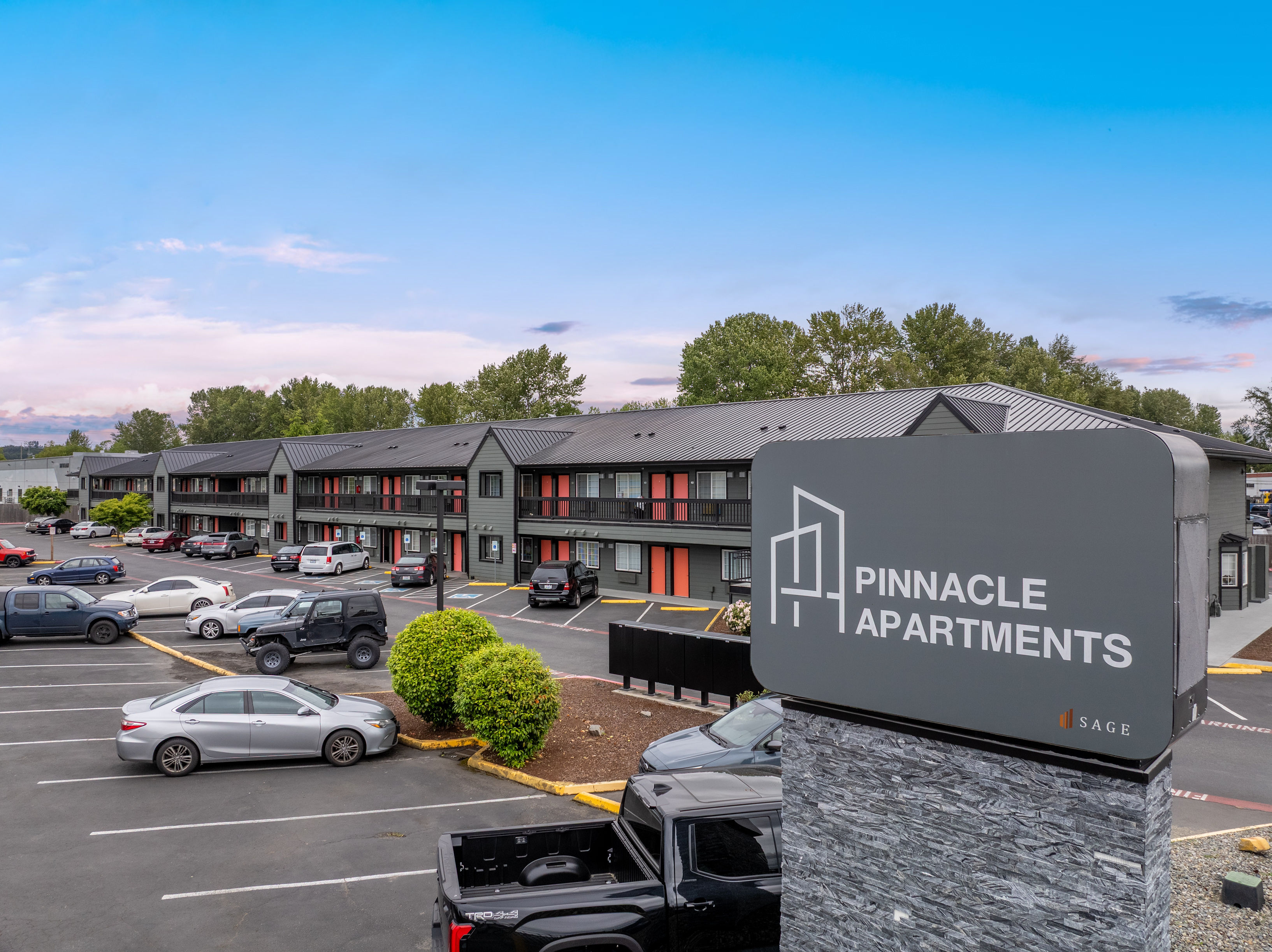
Fife—Pinnacle Hotel: A fire-damaged motel that would have been demolished. We acquired it, fully renovated, and delivered stable workforce housing. This is the environmental story people often miss: conversion is reuse. Demolition is waste.
Mountlake Terrace—Studio 6 Conversion: This project converted a tired, low-occupancy hotel into 120 affordable apartments. The financing, the construction management, the lease-up timeline—all executed in a market where housing costs have become prohibitive for working families.
Kirkland—Motel 6: A few miles from our office. This conversion demonstrated the straightforward economics: a distressed asset in a high-cost market could serve the missing middle if we executed the operational fundamentals properly.
Everett—Econo Lodge Conversion: Another proof point in our backyard. Different building type, similar playbook.
Centralia—124-Unit Development: This project had a 680-person waitlist before it opened. That number tells you everything about Washington's housing shortage. It also tells you something important about Sage's market selection: we're not looking for stable, slow-growth markets. We're targeting places where demand actually exceeds supply by hundreds of people per property.
We also have active operations in Olympia and Issaquah, where we converted a Motel 6 into studio apartments.
Why Washington State Created This Opportunity
Washington's housing crisis has three components: high housing costs, strong employment, and massive undersupply. The state's tech sector employment growth, life sciences expansion, and overall economic strength create constant inbound migration. At the same time, new construction can't keep pace. Seattle's zoning restrictions limit new multifamily. The permitting timeline for new construction is 18-36 months minimum.
Existing hotels sit in desirable locations—near transit, near employment, near services—because that's where hotel developers built them. They were built for density. The only reason they're underutilized is that tourism collapsed in 2020 and never fully recovered in many markets. A building that could house 100 people nightly was housing 20, creating no tax revenue, attracting vacancy and decline.
The 96-0 vote recognized: why wait 24 months for zoning when we can have 100 occupied units in 12 months?
What Changed After the Vote
Before: A conversion project required a conditional use permit, design review, neighborhood notification period, potential hearing, appeals process. Each step added 2-6 months. We'd budget $200,000-$400,000 for entitlements alone.
After: Cities still required building permits and standard inspections, but the land use designation was no longer contested. The administrative path was clear.
The result was a dramatic acceleration in deal velocity. Capital became available faster. Construction financing moved quicker because lenders faced less headline risk. We could underwrite projects with greater certainty.
The Pacific Northwest Market Fundamentals
Washington—and Oregon and Northern California—have structural housing shortages that policy changes alone don't solve. A law that removes zoning barriers helps, but it addresses supply velocity, not supply absolute. If new construction can deliver 500 units per year in a market losing 5,000 units to the price curve (meaning units permanently shifting from middle-income to wealthy-only), conversions filling 100-150 units per year matter.
The Pacific Northwest also has high housing costs and strong employment, which means workforce housing is always undersupplied. It's not a temporary shortage driven by one tech cycle. It's structural.
For Investors and Operators
If you're evaluating hotel conversion opportunities, Washington State's legal clarity is a massive advantage. The 96-0 vote removed a category of risk that killed projects in other states. When your timeline is certain and your entitlements are straightforward, you can focus on the actual value creation: acquiring distressed assets, executing construction management, leasing efficiently, operating professionally.
That's where we've placed our energy. Washington's policy environment allowed it.
Related Articles
- Florida Hotel Conversion Opportunities: Orlando, Tampa, and Beyond
- Municipal Partnership Playbook: How to Get City Approval for Hotel-to-Housing Conversions
- The Missing Middle: Why Workforce Housing Between $800-$1,200/Month Doesn't Exist
- Workforce Housing Waitlists: Why 680 People Signed Up Before Construction Started
- What Happens to Crime When Hotels Convert to Apartments? Data from 25 Properties


