

Workforce Housing Waitlists: Why 680 People Signed Up Before Construction Started
The most powerful validation of the workforce housing thesis came from an unlikely place: Centralia, Washington. Centralia is a small town of 18,000 people, situated between Olympia and Portland, two hours from any major metropolitan center. It's not Seattle. It's not a tech hub or a coastal city with obvious housing crises. It's a working-class community where people have jobs, families, and routines.
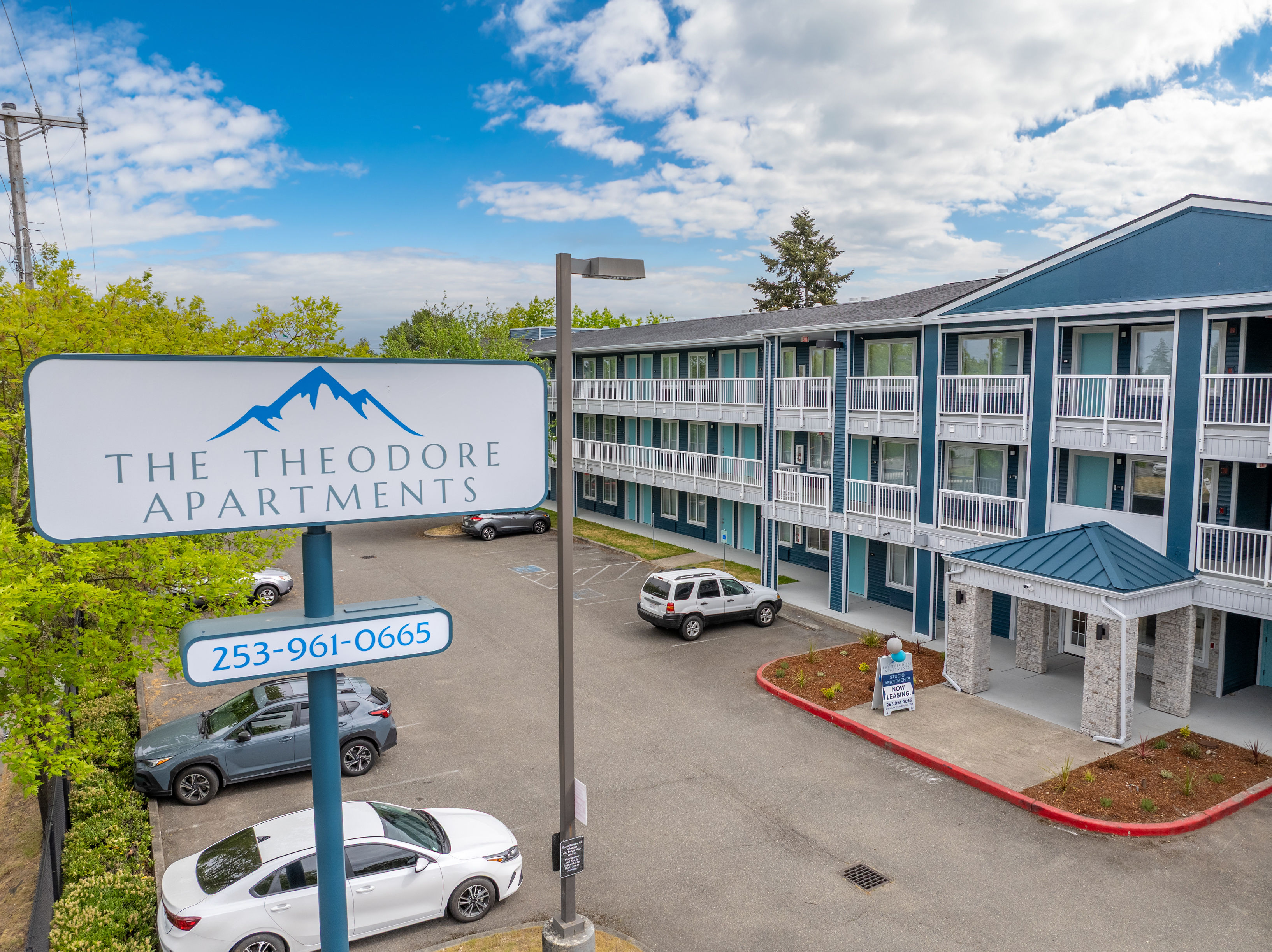
When we announced plans to convert a distressed hotel into workforce apartments, the response was staggering. 680 households signed up for units before we poured concrete. Not after we opened. Not after leasing began. Before we even broke ground. People living in vehicles, in doubled-up housing, in precarious situations put their names on waiting lists for apartments that wouldn't exist for two years. That behavior doesn't happen when housing supply is adequate.
Centralia forced a simple question: if this small town two hours from any major city has 680 households desperate for affordable apartments, where in America does the housing crisis not exist? The answer is straightforward: nowhere. Every community has the missing middle. Every place has working people living in situations that housing supply should prevent.
Who's on the Waitlist: The Tenant Profile
The 680 households waiting in Centralia weren't random. They represented distinct demographic groups, each with consistent characteristics. Approximately 40-50% were young professionals, ages 25-35, working their first real jobs or progressing through career advancement. Teachers, nursing assistants, warehouse supervisors, automotive technicians, customer service managers. People with reasonable incomes who simply couldn't find housing at prices matching their earnings.
Another 30-40% were middle-income workers, ages 30-55, with established careers and stable employment. Electricians, healthcare workers, school administrators, skilled tradespeople. People who'd been working for 10-20 years and still couldn't access housing matching their income level. The expectation is that people with 15-20 years of career development can afford decent housing. In most American markets, they cannot.
What united these groups wasn't desperation in the stereotypical sense. These weren't people without jobs. They were people with employment who still couldn't afford housing at market rates. Kathy and Dean, a veteran and his working wife, had lived in their truck for six years while both maintained employment. Six years of working while sleeping in a vehicle. They became model tenants at Centralia, stable renters who understood the value of stable housing because they'd lived without it.
The Working and Homeless Paradox
One of the most counterintuitive findings in homelessness research is that people living in vehicles often have higher employment rates than other homeless populations. The assumption that homelessness and joblessness are synonymous is incorrect. People can work full-time and still be homeless because their wages don't match local housing costs.
In Los Angeles, 25% of the homeless population lives in vehicles. Seattle reports 50%. San Francisco, 35%. These aren't unemployed people; they're employed people whose incomes don't meet housing costs. Central Florida tracked a particularly dramatic trend: 42 people sleeping in cars in 2023 increased to 267 in 2024—a 535% increase in a single year.
That explosive growth in vehicle-dwelling homelessness signals people falling out of traditional housing because rents exceeded income growth. These aren't welfare recipients or chronically homeless populations. They're working people who lost the ability to afford housing in their communities.
Lease-Up Velocity: How Fast Demand Materializes
The Centralia experience wasn't unique in demand intensity; it was notable because it happened in a small non-metropolitan market. The lease-up velocity—how quickly units move from available to occupied—in workforce housing conversions consistently validates the demand thesis.
Average lease-up time for workforce housing conversions runs 6-9 months to achieve 90%+ occupancy. That's remarkably fast in residential real estate. More remarkably, some properties achieve 90%+ occupancy in 3 months. When units are renting at $800-$1,200/month in markets where equivalent quality is $1,500-$2,000+, demand is essentially unlimited.
The tenant quality follows from demand intensity. When you have 10 qualified applicants for every unit, you select the most financially stable, most employment-secure applicants. You're not filling beds; you're cherry-picking from abundant qualified candidates.
Turnover Rates and Stability: The Often-Overlooked Benefit
Institutional apartment operators obsess over turnover rates. High turnover destroys returns—every move-out triggers leasing costs, concessions, preparation for the next tenant, potential vacancy loss. Portfolio operators track turnover religiously because it directly impacts cash flow and resident lifetime value.
Workforce housing conversions experience extraordinarily low turnover. Residents who've experienced housing instability—living in vehicles, doubling-up, precarious situations—value stable housing profoundly. They're not looking for the next cool neighborhood or the newer building. They have housing. That security is the primary value proposition.
Turnover rates below 10% annually are normal in workforce conversions. Turnover rates below 15% are standard. Those numbers are substantially below-market for conventional apartments and translate directly to operational efficiency and margin expansion.
Rent Price Points: The Crucial Bandwidth
The Centralia waitlist formed around specific rent prices: $800-$1,200/month. Those prices weren't arbitrary. They represent the upper boundary of affordability for households earning $35,000-$65,000 annually—the missing middle that nobody else serves.
At $1,200/month, a household earning $60,000 annually is spending 24% of gross income on rent—financially prudent and within conventional lending guidelines. At $1,500/month, they're approaching the 30% threshold where housing becomes cost-burdened. At $2,000/month, they're dangerously exposed.
The conversion model delivers rents at prices that make housing affordable without subsidies. That affordability creates the demand signal. Rents at $300-$500 below Class A apartments in the same market are substantially cheaper while delivering comparable residential quality. The economics make sense for residents and for operators.
If Centralia Has This Demand, Where Doesn't It Exist?
That's the central question. Centralia has population of 18,000. It's not a destination. It doesn't have major employers generating outsized income levels. It's a normal working-class town. If Centralia has 680 people desperate for workforce housing before construction began, then every community in America has this demand.
The crisis isn't geographic. It's not confined to coastal cities or tech centers. It's systemic across the entire country. The missing middle exists everywhere because everywhere has working people whose wages don't match local housing costs.
Scale and Replicability: What Centralia Teaches
The Centralia experience demonstrates that workforce housing demand isn't limited to specific geographies or specific demographic concentrations. It's a nationwide crisis with consistent characteristics: working people, stable employment, inadequate housing supply at prices matching their incomes, and extraordinary willingness to sign up for waiting lists for housing that doesn't yet exist.
That validation extends the conversion thesis beyond individual properties or specific markets. If Centralia works, if 680 people will wait for apartments in a small Washington town, then the conversion model works almost everywhere. The barriers to scaling aren't demand-based. They're supply-based: finding enough distressed properties to convert, financing the conversions, and managing the operational complexity.
The 680 waiting households in Centralia represent validation that workforce housing is the housing crisis facing America. Not luxury shortage. Not homelessness among the chronically unhoused. The crisis is the working middle—people earning $35K-$65K, employed, stable, and unable to find housing at prices their incomes support. That crisis is universal, and it's waiting to be solved by anyone willing to convert the distressed assets that can serve it.
Related Articles
- The Missing Middle: Why Workforce Housing Between $800-$1,200/Month Doesn't Exist
- What Happens to Crime When Hotels Convert to Apartments? Data from 25 Properties
- Property Management for Converted Hotels: Why Third-Party Management Wins
- Hotel Conversion Case Study: $8.5M Purchase to $18.9M Sale in 19 Months
- Florida Hotel Conversion Opportunities: Orlando, Tampa, and Beyond
For the reasons new construction has not closed the gap, see Why Workforce Housing Stays Scarce Amid New Building.