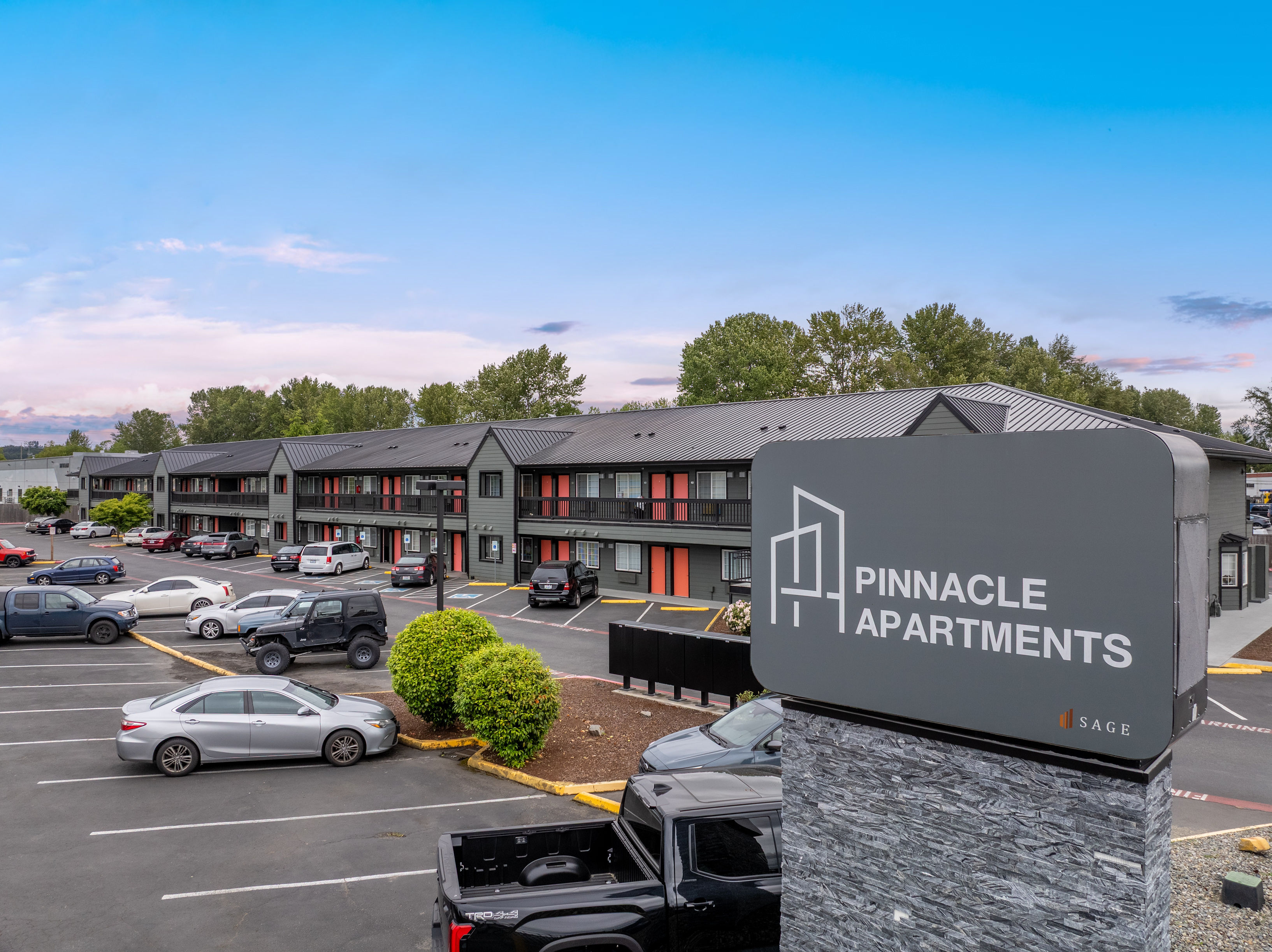


Florida Hotel Conversion Opportunities: Orlando, Tampa, and Beyond
Florida's housing crisis differs from Washington's or California's in a crucial way: it's not being driven by a single booming sector. Instead, rapid population growth is colliding with a tourism-dependent economy now oversupplied with hotels. That combination creates a distinctive market opportunity for operators willing to acquire distressed hotel assets and convert them into workforce housing.
The state's combination of tourism industry distress and rapid population growth has created ideal conditions for conversion. Florida's population has grown by approximately 1 million people per decade. That inbound migration is relentless. At the same time, the hospitality sector is carrying excess inventory—hotels built during the boom years are struggling to fill rooms at sustainable occupancy rates. When supply of workers is growing faster than supply of housing, and hotels are sitting half-empty, the math becomes obvious.
The Central Florida Market: A Case Study in Mismatch
Central Florida exemplifies the opportunity. Between August 2023 and August 2024, local authorities documented 42 people sleeping in cars. The following year—just 12 months later—that number had grown to 267. That's a 535% increase.
Let that number sit for a moment. A homeless encampment in your car didn't double. It didn't triple. It grew more than five-fold in a single year. This didn't happen because a major employer closed. It happened because population growth and housing construction are fundamentally mismatched, and that gap is accelerating.
Orlando's Orange Blossom Trail corridor contains multiple distressed hotel properties. These aren't trophy assets. They're older, mid-scale hotels that served business travelers or tourists on tight budgets. Today, they're struggling with 40-50% occupancy and declining revenues. Owners are losing money every month. That's exactly when acquisition prices fall to levels where conversion economics work.
Why Florida's Fundamentals Support Conversions
Three factors make Florida uniquely positioned for hotel conversion activity:
No State Income Tax: Florida imposes no state income tax, making it exceptionally attractive to investors seeking to optimize returns. This is a permanent structural advantage that drives capital inflow and is the single largest reason large institutional investors have been accumulating Florida real estate. Investors can deploy capital with returns untaxed at the state level—something they can't achieve in California, Washington, New York, or Massachusetts.
Strong Population Growth: Unlike some markets where population growth is concentrated in certain age groups or income brackets, Florida's growth is broad-based. Young families, retirees, middle-income workers, and remote workers are all moving to Florida. This sustained, diverse inbound migration means workforce housing demand is not cyclical. It's structural and growing year-over-year.
Tourism-Dependent Economy Creates Hotel Distress: Florida's economy relies heavily on tourism and hospitality. That industry proved remarkably fragile during COVID and struggled significantly afterward. Business travel recovered only partially. International tourism remains below 2019 levels in many markets. That distress translates directly to available hotel assets at discounted prices. Sellers need liquidity. Buyers with conversion expertise can negotiate effectively.
Climate and Construction Advantages
Florida's warm climate is often overlooked in conversion economics. Unlike northern states where winter weather can delay or suspend construction, Florida permits year-round construction schedules. This isn't a trivial advantage. A 12-month construction timeline in Florida can be a 16-month timeline in Chicago or Minneapolis. Faster construction means earlier lease-up, earlier stabilization, and lower carrying costs. It also means faster refinancing and investor capital return.
Construction timelines matter enormously in conversion project economics. Every month of delay is carrying cost—labor wages advancing, construction financing interest accruing, no lease-up income yet. Florida's weather is an understated competitive advantage.
Zoning Considerations in Florida Municipalities
Florida cities vary widely in their approach to conversions. Some municipalities—particularly Miami-Dade County and Broward County—have implemented streamlined permitting processes that recognize conversion as a valuable housing tool. Others maintain traditional land use barriers that complicate conversion economics.
Smart operators research municipal code in each target location. Key questions: Does the municipality allow conversion by right, or require a conditional use permit? Are there design standards that mandate external modifications, increasing costs? Do zoning codes recognize multifamily residential densities achieved by hotel conversions, or do they attempt to restrict unit density? Are there affordability requirements that change the pro forma?
Orlando, Tampa, Jacksonville, and Miami each have different regulatory environments. Tampa has been notably progressive on housing policy. Jacksonville's regulatory structure is more traditional. Strategic acquisition means identifying properties in municipalities where entitlements are clear and timelines are predictable.
Workforce Housing Demand in Florida Metro Areas
The demand profile is distinct from markets like Seattle. In Florida, workforce housing demand isn't driven by a single high-salary sector. It's driven by the absolute shortage of affordable rentals across income levels. Healthcare workers, retail employees, hospitality workers (ironically), construction workers, and administrative staff all need housing they can afford. A hotel converted to 100 studio and one-bedroom units at $800-$1,200 monthly rent serves a population that earns $30,000-$50,000 annually—people whose wages have grown much slower than housing costs.
The missing middle in Florida is genuinely in the middle. Not subsidized. Not luxury. Just workforce-appropriate pricing in a market where that product category has nearly disappeared.
Conversion Rents: Serving the Missing Middle
Florida's market allows for conversion economics at rents substantially lower than some coastal markets. A typical conversion costs $800,000-$1,000,000 per unit (acquisition plus renovation). In high-cost metros like Seattle or San Francisco, that translates to $1,400-$1,800 rents. In Florida, where construction costs and land acquisition prices are lower, the same quality conversion can rent for $800-$1,200.
This is not subsidized housing. It's not below-market-rate. It's simply market-rate housing appropriate for workers earning $35,000-$48,000 annually. The missing middle in Orlando, Tampa, Jacksonville, Miami, and surrounding metros is not invisible. It's visible in the 267 people sleeping in their cars. It's visible in the 535% increase in 12 months.
Sage's Florida Operations
Sage Investment Group has active operations in Florida. We've evaluated properties in Orlando, Tampa, Miami, and Jacksonville. Our approach remains consistent: acquire distressed assets, execute professional construction management, deliver competitive workforce housing, and operate with the discipline and scale that permanent owner-operators employ.
Florida's fundamentals—population growth, no state income tax, tourism-driven hotel distress—create a multi-year opportunity window. That window won't remain open indefinitely. Eventually, hotel oversupply will normalize, acquisition prices will rise, and conversion economics will tighten. Smart capital is deploying to Florida conversions now because the window is open and the runway is visible.
For Capital and Operators
If you're evaluating hotel conversion opportunities geographically, Florida deserves serious consideration. The macro drivers are strong, the asset availability is high, and the market demand is acute. What's required is operator discipline: rigorous acquisition underwriting, construction management expertise, and the professionalism to achieve consistent occupancy and rent growth. The market opportunity is real. Execution matters enormously.
Related Articles
- Washington State Hotel Conversions: How the 96-0 Vote Changed Everything
- Hotel Distress Indicators: How to Identify Conversion Opportunities Before They Hit the Market
- Municipal Partnership Playbook: How to Get City Approval for Hotel-to-Housing Conversions
- Hotel Conversion Case Study: $8.5M Purchase to $18.9M Sale in 19 Months
- Hotel Conversion Financing: Construction Loans, Bridge Debt, and Capital Stacking