

The Missing Middle: Why Workforce Housing Between $800-$1,200/Month Doesn't Exist
America's housing market is bifurcated in a way that leaves millions of working people behind. On one end, we have unlimited capital flowing into luxury apartments—we build those constantly. On the other end, we have subsidized housing programs serving the poorest Americans. But the middle? The households earning $35,000 to $65,000 annually—60% to 120% of Area Median Income—are almost entirely ignored by the development community. This is the missing middle, and it represents one of the greatest opportunities in American real estate.
I've spent the last decade watching this dynamic play out across dozens of projects, and the data tells an undeniable story. The Low-Income Housing Tax Credit, our primary tool for affordable housing, only serves households earning 50-60% of AMI. Meanwhile, 25% of households earning 80-120% of AMI are cost-burdened—spending more than 30% of income on housing. These aren't people on government assistance. They're teachers, nurses, warehouse workers, electricians, and healthcare technicians. They have jobs. They just can't find housing they can afford.
The Supply Problem Is Structural, Not Cyclical
The shortage isn't temporary. America is 4.7 million homes short of what we need. From 2000 to 2020, median rents rose faster than income in 88% of U.S. counties—affecting 97% of the population. That's not a regional issue or a temporary market correction. That's a systemic failure of the housing market to serve the majority of Americans.
The income needed to buy a home has doubled since 2019. A household that could afford a median home five years ago simply cannot today, even if their own income has increased. The math has moved against ordinary working people, and the development community has noticed: nobody builds $800-$1,200/month apartments because the debt markets don't support it. The returns aren't sufficient for institutional capital.
What We Actually Built Versus What We Needed
I've been watching the outcomes of expensive affordability programs, and the results are sobering. King County, Washington—home to Seattle and some of the wealthiest people in the world—spent $3.9 billion on housing solutions. And yet they still have 300,000 cost-burdened households and 17,000 homeless people living on the streets. When you look at what that capital actually produced, the ironies become apparent.
The "affordable" LIHTC units in King County cost $1,839 per month to operate—higher than the $1,617 market-rate rents for comparable units. We're paying a premium to solve the problem using financing structures that were never designed for this income tier. The solution exists outside the traditional development box, but it requires looking at assets that institutional capital has written off.
The Hotel Conversion Answer
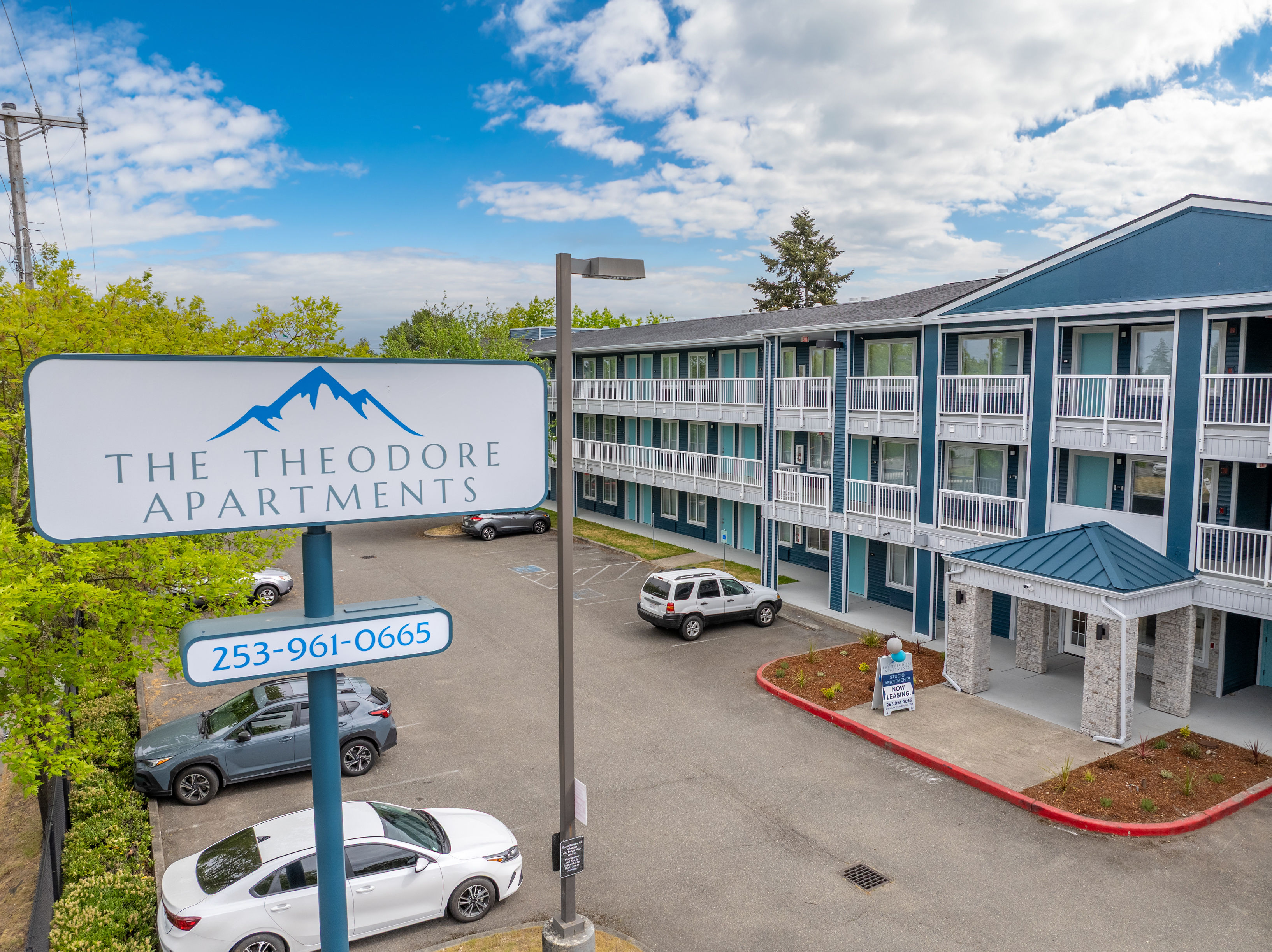
For the past several years, I've been converting distressed hotels into workforce housing. These aren't luxury properties or trophy assets. They're hotels that have struggled through the pandemic, failed to keep up with maintenance, and represent capital's abandonment of certain geographies and business models. The existing buildings already solve the construction riddle—the structure is there, the parking is poured, the utilities are extended. We're not building; we're adapting.
The mathematics change dramatically. Where new construction costs $250,000 to $500,000 per unit, hotel conversions deliver rents at $800-$1,200 per month because we're not starting from zero. We're using existing infrastructure as a foundation. The per-unit costs for conversion typically run $50,000 to $150,000—a fraction of ground-up development. That economic reality makes it possible to serve the missing middle without subsidies.
Demand Signals from Unlikely Places
The clearest validation of this thesis came from Centralia, Washington. Centralia is a small town of 18,000 people, two hours from any major metropolitan center, sitting between Olympia and Portland. It's not Seattle. It's not a coastal tech hub. It's a working-class community where people actually live and work.
We announced plans to convert a distressed hotel into 680 workforce apartments. The response was staggering: 680 households signed up before we poured concrete. Not after we opened. Not after leasing began. Before construction started. People living in vehicles, in doubled-up housing, in precarious situations put their names on a list for apartments that wouldn't exist for two years. That behavior doesn't happen when there's adequate supply.
If Centralia—a small town far from major economic centers—has 680 households desperate for this housing, where in America does the crisis not exist? The answer is nowhere. Every place has the missing middle. Every community has working people living in vehicles, doubling up in one-bedroom apartments, or commuting hours from distant affordable suburbs.
The Gap Between What We Say We Want and What We Build
Politicians talk constantly about affordability. Nonprofits raise billions. Local governments pass laws requiring affordable units. And yet the missing middle remains unserved because the economics of traditional financing don't work. You cannot build new apartment buildings profitably at $1,200/month rents using conventional debt financing.
You can, however, acquire and convert existing assets. You can take buildings that are generating negative cash flow, that are losing money every month, that represent capital losses for their owners, and put them to productive use. That's not subsidy. That's economics.
I'm convinced that hotel conversions represent the only scalable solution to the missing middle. Not subsidies. Not tax credits. Not zoning reform—though those all help. The direct answer is taking distressed buildings and serving the households that nobody else wants to serve because the conventional finance model can't support them.
The missing middle isn't missing because the demand isn't there. It's missing because the supply mechanisms are broken. We've built an entire development industry optimized for luxury and subsidized poor. We forgot about teachers, nurses, electricians, and the people building our cities. That oversight is the greatest real estate opportunity in America.
Related Articles
- Workforce Housing Waitlists: Why 680 People Signed Up Before Construction Started
- Adaptive Reuse Real Estate: Why Converting Existing Buildings Beats New Construction
- Hotel Conversion Case Study: $8.5M Purchase to $18.9M Sale in 19 Months
- Municipal Partnership Playbook: How to Get City Approval for Hotel-to-Housing Conversions
- Washington State Hotel Conversions: How the 96-0 Vote Changed Everything
For the reasons new construction has not closed the gap, see Why Workforce Housing Stays Scarce Amid New Building.
