
Real Estate Investments with 18-25% Target Returns: Comparing Asset Classes
Institutional investors and individual capital allocators pursuing real estate increasingly ask a fundamental question: What asset classes can sustainably deliver 18-25% annual returns? The answer matters because this return threshold represents a meaningful hurdle over stock market alternatives (historically 10% annually), justifying the illiquidity, complexity, and manager-dependency of real estate investment.
Most conventional real estate asset classes fall short of this 18-25% target. Core apartment REITs deliver 8-12% historical returns. Stabilized multifamily syndications promise 12-18% returns but achieve those in environments with specific rent growth and cap rate assumptions. These returns are achievable but not exceptional within real estate's risk-adjusted framework.
However, value-add commercial real estate and hotel-to-apartment conversions can consistently deliver returns in the 18-25% range. Understanding why these asset classes outperform requires examining the economics of each strategy and recognizing how conversion projects stack multiple return sources simultaneously.
REITs and Stabilized Multifamily: The Baseline
REITs provide transparent, liquid access to apartment buildings. Large REITs like AvalonBay, Essex, or Equity Residential deliver steady returns through dividends (3-4%) and appreciation (5-8% annually in favorable markets). Total return averages 8-12% over full cycles. This consistency is valuable—returns are predictable and distributions reliable. However, returns operate within a range constrained by market capitalization, regulatory requirements, and shareholder expectations.
Stabilized multifamily syndications operate similarly. A sponsor acquires apartment buildings trading at market-rate cap rates (5-7%), holds them for 5-7 years capturing rent growth and modest cap rate compression, then sells. If rents grow 2-3% annually and cap rates compress 50-75 basis points, total returns reach 12-15%. Returns at the upper end of this range assume favorable rent growth and cap rate movement—not always guaranteed.
These asset classes provide valuable exposure to apartment fundamentals in a diversified real estate portfolio. They are not, however, where investors seeking 20%+ returns typically concentrate capital.
Value-Add Commercial and the Complexity Premium
Value-add commercial real estate—typically office or retail properties requiring repositioning—targets 14-20% returns. A sponsor acquires an underperforming office building or aging shopping center, renovates it, re-tenants, and sells into a stabilized market. This strategy creates value through active management rather than passive market appreciation.
Returns reach 18-25% when execution succeeds. However, the strategy carries meaningful execution risk. Office markets have faced secular headwinds. Retail conversions require tenant quality and lease structures supporting the projected exit cap rate. Market conditions during the exit significantly impact returns.
Value-add commercial returns are achievable but require precise execution, favorable market timing, and competent management. The "value-add" label itself indicates returns depend on adding value through active management, not passive market exposure.
Hotel-to-Apartment Conversions: Blending Multiple Return Sources
Hotel-to-apartment conversions outperform both of the preceding strategies because they blend multiple return sources simultaneously—a feature distinguishing them within real estate's return hierarchy.
Cap Rate Arbitrage provides the foundational return source. Acquiring a hotel at 12% cap rates and selling apartment buildings at 6-7% cap rates automatically generates substantial value appreciation independent of income growth. As previously discussed, approximately 50% of returns in successful conversions derive from this cap rate differential alone.
NOI Expansion provides the second source. Converting operations from hotels to apartments improves unit economics substantially. Apartments generate 35-40% profit margins; hotels often deliver 15-20%. This NOI improvement directly increases property value at any given cap rate.
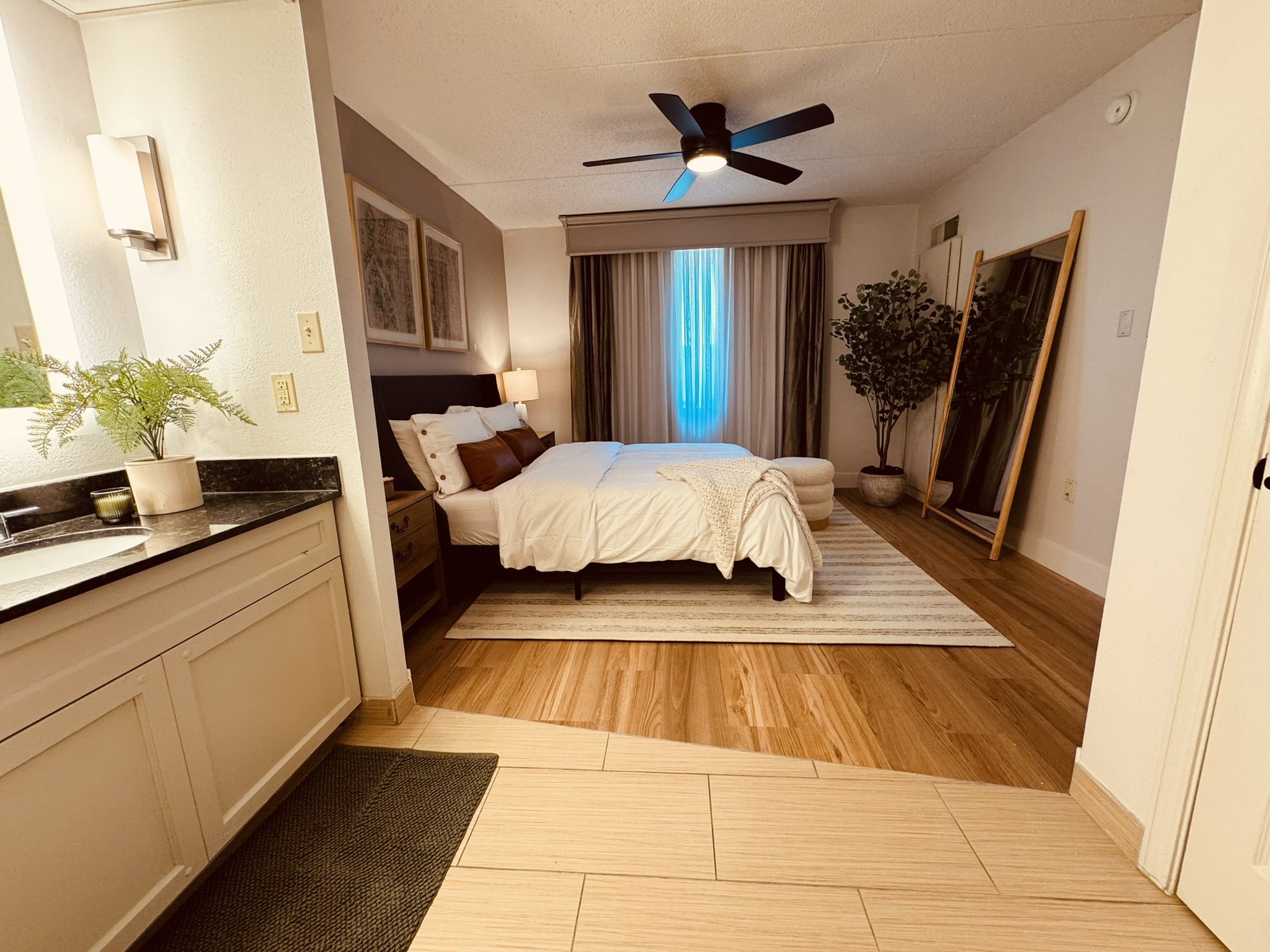
Cost Advantage amplifies returns further. Conversions cost $50,000-$150,000 per unit versus $250,000-$500,000 for new construction. This cost differential means capital efficiency surpasses nearly every alternative real estate strategy. The same amount of development capital produces significantly more housing capacity through conversion versus new construction.
Speed Premium compounds the return calculation. Conversions lease up within 6 months to 90%+ occupancy, compared to 12-24 months for ground-up development. Faster cash flow achievement accelerates IRR calculations and enables earlier capital recycling to subsequent projects.
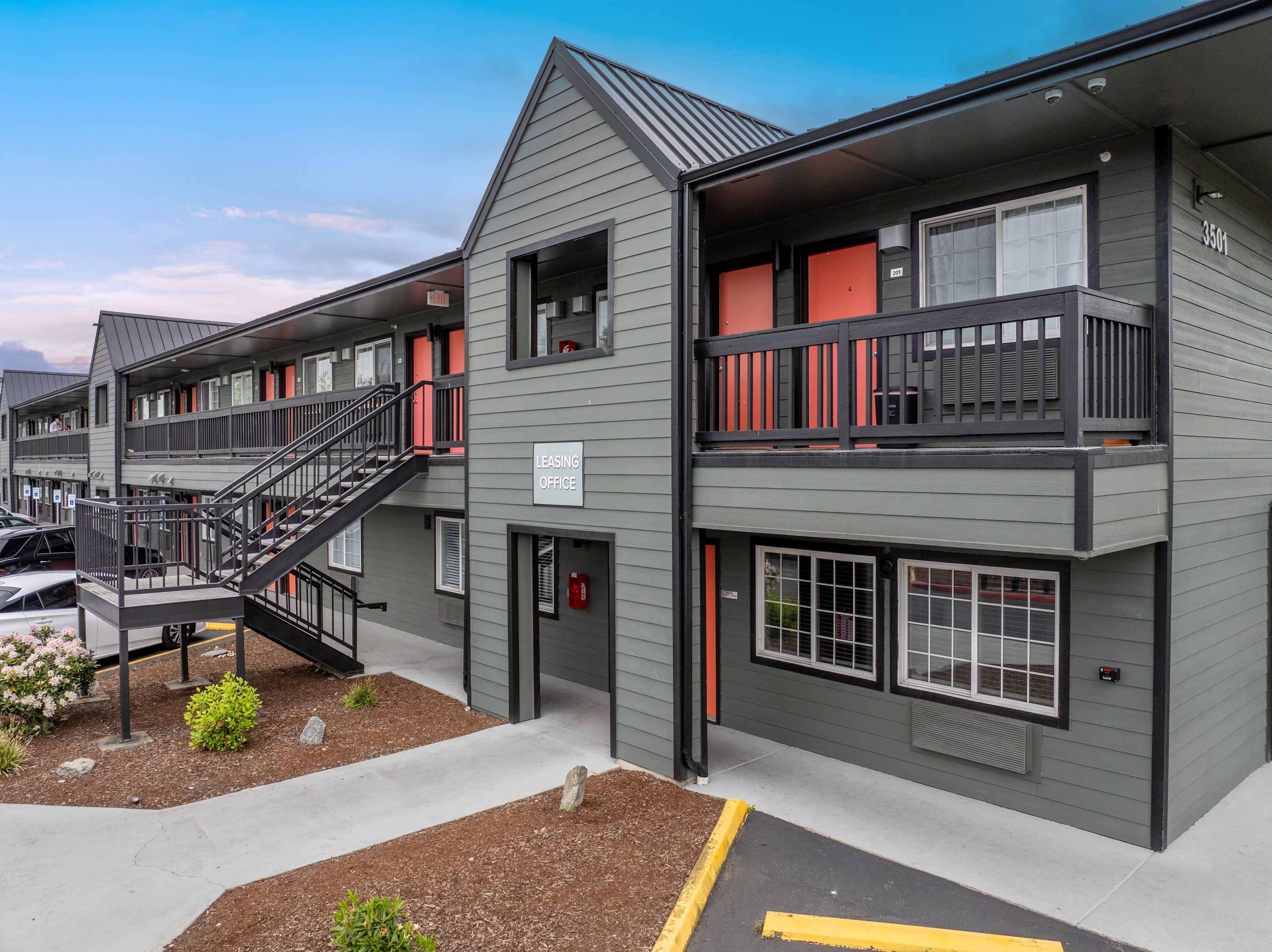
The Sahara Apartments project illustrates this stack of return sources in practice. The transaction achieved 120% equity return in 19 months—an extraordinary result, but achieved through this stacked mechanism. Cap rate compression, NOI expansion from hotel-to-apartment economics, cost advantages over new construction, and rapid stabilization combined to create returns substantially exceeding 20% annually.
The Distribution of Returns in Hotel Conversions
Successful conversion projects typically follow a performance pattern. Average lease-up reaches 90%+ occupancy within 6 months. Fastest lease-ups have achieved 90%+ occupancy in 3 months. This rapid stabilization matters because it accelerates the timeline from acquisition to stabilized operations—the point where the property achieves consistent cash flow and commands market-rate cap rates.
Returns compound during this stabilization period. A property leased 50% generates negative cash flow month one. At 70% lease-up month two, cash flow improves. At 90% lease-up month four, the property transitions to cash flow positive. By month seven or eight, the property functions as a stabilized apartment building, generating the NOI supporting a 6-7% cap rate in the exit valuation.
This arc from distressed hotel to stabilized apartment creates a compression of value creation into a concentrated timeframe—exactly where equity returns accelerate most dramatically.
Why Higher Complexity Equals Better Returns
Hotel-to-apartment conversions rank among the most complex real estate strategies. Development, asset management, and conversion expertise combine with execution complexity rated 8-8.5 out of 10 on difficulty scales. This complexity barrier provides significant competitive advantage for experienced operators.
Why? Fewer competitors pursue complex strategies, which means less competition for deals. A market participant evaluating hotel conversion requires expertise spanning hospitality operations, apartment economics, construction management, zoning/entitlements, and repositioning strategy. This expertise creates barriers to entry—not everyone possesses the combination of capabilities needed.
Fewer competitors means better pricing. An experienced operator can acquire hotels at prices that remain too risky or complicated for most investors. The same property that a value-add sponsor views as overly risky, a conversion specialist evaluates confidently based on established playbooks and prior execution experience.
This expertise-based pricing advantage directly translates to superior returns. The 15-25% returns achievable in conversions partially reflect compensation for complexity—but experienced operators can execute that complexity reliably, capturing the returns without the corresponding risk other market participants perceive.
Tenant Mix and Workforce Housing Economics
Conversion projects typically attract tenant demographics distinct from luxury or Class A apartments. A conversion project houses young professionals (40-50%) and middle-income workers (30-40%). This tenant composition reflects the unit economics and pricing positioning of conversions.
Conversions typically deliver apartments at pricing 15-25% below comparable new construction Class A buildings. A new construction luxury apartment might rent for $1,400/month; an equivalent-quality conversion apartment might lease for $1,150-$1,200. This price positioning attracts working professionals and middle-income households rather than luxury market renters.
This tenant demographic creates extraordinary operational advantages. Workforce housing exhibits dramatically lower turnover compared to luxury or student-focused housing. Once tenants transition to workforce housing apartments, they remain longer—often 3-5 years. This extended tenure reduces turnover costs, stabilizes occupancy, and creates predictable cash flow.
The stability of workforce housing tenancy directly supports the cap rates buyers apply to conversion properties. A luxury apartment with 40% annual turnover commands higher cap rates (lower valuations) than a workforce apartment with 15% turnover. The same NOI generates higher property value when associated with stable, long-term tenancy.
Return Profile Comparison Summary
Comparing return profiles across asset classes:
REITs and Stabilized Multifamily: 8-12% annual returns, highly liquid, minimal execution risk, transparent management.
Value-Add Commercial: 14-20% target returns, moderate execution risk, moderate complexity, dependent on market timing and tenant quality.
Hotel-to-Apartment Conversions: 15-25%+ historical returns, higher execution complexity, but blended returns from multiple sources (arbitrage, NOI, cost advantage, speed), strong management demonstrated through track record.
For investors specifically seeking to exceed 18-25% return thresholds while maintaining realistic, achievable targets, hotel conversions represent one of the few asset classes with demonstrated capability and established execution track records. The higher complexity that makes conversions difficult for marginal operators becomes a competitive moat for experienced sponsors—creating both the opportunity and the superior pricing necessary to deliver outsized returns.
Related Articles
- Cap Rate Arbitrage: How Hotel-to-Apartment Conversions Create 50-70% Value Increases
- Hotel Conversion Case Study: $8.5M Purchase to $18.9M Sale in 19 Months
- Real Estate Syndication vs REIT: Which Is Better for Accredited Investors?
- 1031 Exchange into Real Estate Syndication: How Hotel Conversions Qualify
- Opportunity Zone Real Estate Investments: Hotel Conversions as Qualified Projects