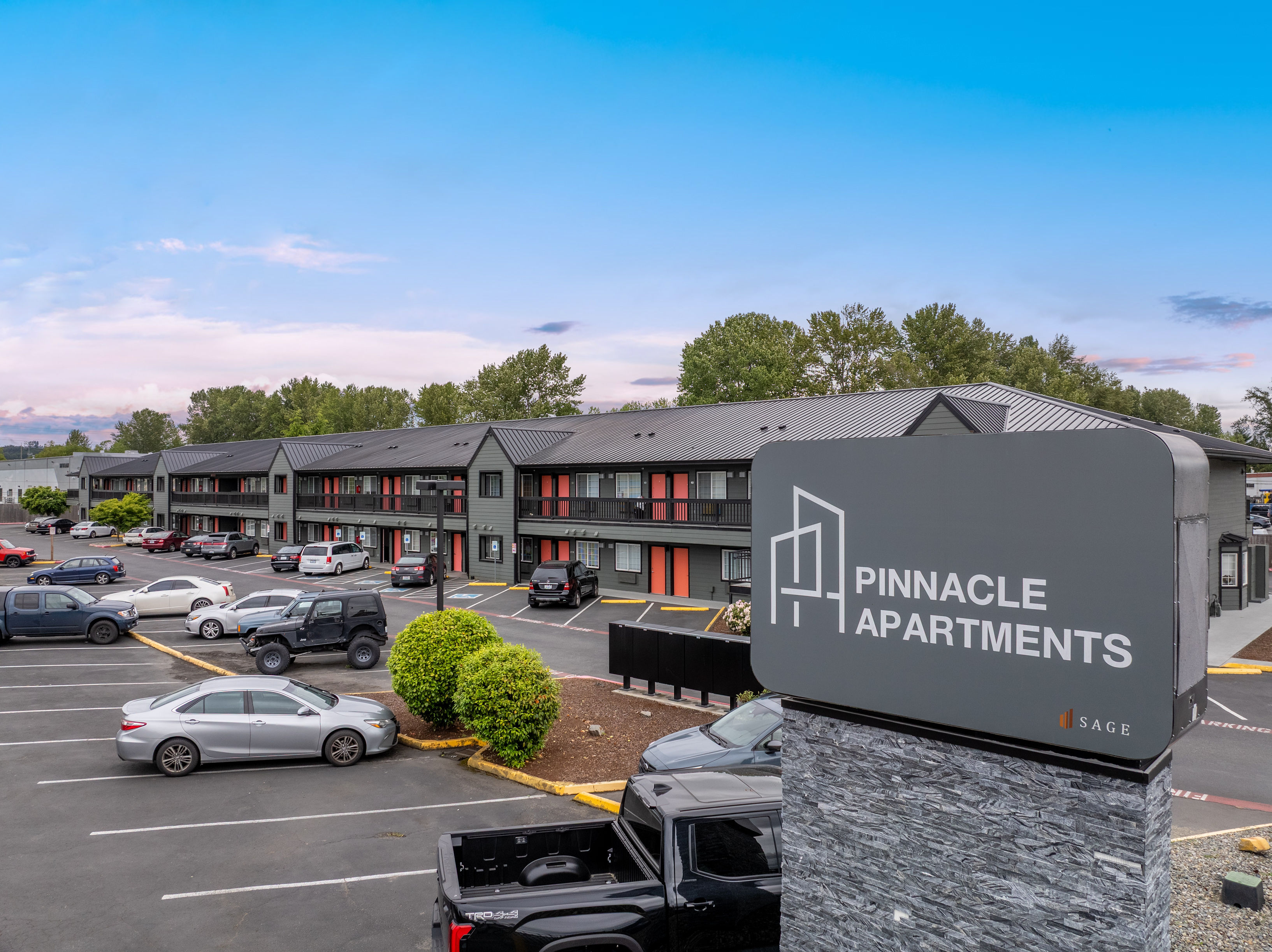


The adaptive reuse conversation has expanded dramatically since 2020. With 900+ million square feet of office space sitting vacant across the U.S. and hotel distress concentrated in secondary and tertiary markets, both building types are in play for residential conversion. But a closer look at the structural, financial, and operational realities reveals that hotel conversions are significantly more practical than office conversions—and it's not close.
This isn't an opinion. It's an engineering and financial reality rooted in how these buildings were originally designed. Let me walk through why.
Plumbing: The Single Biggest Factor
Plumbing is the single most important variable in any conversion to residential use. Residents need water supply and waste drainage in every unit—for kitchens, bathrooms, and laundry connections. The question is whether the existing building already has plumbing infrastructure that supports unit-by-unit service.
Hotels have plumbing to every room. Every hotel room has a bathroom with supply lines and drain lines. Extended-stay hotels often have kitchenettes with additional plumbing. The infrastructure to deliver water and remove waste on a per-unit basis already exists. Conversion requires modifying and upgrading that plumbing—not installing it from scratch.
Office buildings have plumbing on each floor, but only to centralized restrooms and kitchenettes. A typical office floor has two restroom cores serving the entire floor plate. Converting a 20,000-square-foot office floor into 25 apartments requires running new plumbing supply and waste lines to every unit from scratch—through concrete floor slabs, through walls that weren't designed for plumbing chases, through structural elements that may not accommodate new penetrations.
This difference alone can account for $30,000-$50,000 per unit in additional cost for office conversions. In a building with 200 units, that's $6-10 million in plumbing cost that hotel conversions simply don't face.
Floor Plate and Unit Layout
Hotel rooms were designed as individual living units. They have walls, doors, windows, and private bathrooms. The floor plate is already divided into unit-sized spaces. A typical hotel room (250-400 square feet) translates naturally to a studio or small one-bedroom apartment.
Office buildings were designed as open floor plates. A typical office floor is a large, undivided space (or cubicle-divided) with a central core containing elevators, stairwells, and restrooms. Converting to residential requires building every partition wall, every unit entry door, and every bathroom from scratch. The floor plate must be entirely reconfigured.
More challenging: office buildings often have deep floor plates where interior units receive no natural light. Building codes require habitable rooms to have windows. A 100-foot-deep office floor plate can't easily accommodate units in the interior—the space is too far from exterior walls. Hotel floor plates, designed with rooms along exterior corridors, already solve this problem: every room has a window.
Developers attempting office conversions often discover that 25-40% of the floor plate can't be converted to habitable residential space due to light and ventilation requirements. That wasted space raises the effective cost per deliverable unit significantly.
HVAC Systems
Hotels use individual HVAC systems per room—either PTAC units (the common through-wall units you see in hotel rooms), split systems, or in newer hotels, variable refrigerant flow (VRF) systems. Each room has independent climate control. Converting to residential requires upgrading or replacing these systems, but the fundamental infrastructure—individual climate control per unit—already exists.
Office buildings use centralized HVAC systems designed for open floor plans. A single air handling unit conditions an entire floor. Converting to individual unit climate control requires either installing new distributed systems (PTACs, mini-splits) with new wall penetrations and condensate drainage, or redesigning the ductwork to serve individual units rather than open spaces. Both approaches are expensive and disruptive.
In climate-controlled markets (most of the U.S.), HVAC conversion for offices adds $8,000-$15,000 per unit beyond what hotel conversions require.
Electrical Systems
Hotels have individual electrical circuits per room, typically 2-4 circuits supporting lighting, outlets, and HVAC. Converting to residential requires upgrading to 4-7 circuits per unit (adding kitchen circuits for refrigerators, dishwashers, microwaves, and ranges) and often upgrading the building's electrical service capacity. This is meaningful work, but the per-room distribution infrastructure exists.
Office buildings have electrical distribution designed for commercial loads—high-capacity circuits serving floors of computers, servers, and fluorescent lighting. The distribution pattern is completely wrong for residential use. Per-unit metering doesn't exist. Individual unit panels don't exist. The entire electrical distribution must be redesigned and rebuilt for residential occupancy.
Cost Comparison: The Numbers
When you aggregate the differences across plumbing, HVAC, electrical, floor plate reconfiguration, and unit construction, the cost gap is substantial:
Hotel-to-apartment conversion: $50,000-$150,000 per unit. Office-to-apartment conversion: $150,000-$400,000 per unit.
The cost overlap zone (where expensive hotel conversions meet efficient office conversions) is narrow. The typical office conversion costs 2-3 times what a typical hotel conversion costs. This gap directly impacts investor returns, project feasibility, and ultimately, the rent levels required to make the project economics work.
And this is the critical point for workforce housing: higher conversion costs require higher rents to generate adequate returns. Hotel conversions can produce apartments renting at $800-$1,200/month and still generate strong investor returns. Office conversions at 2-3 times the cost often require $1,800-$2,500/month rents to pencil—which serves a different (wealthier) demographic and doesn't address the workforce housing shortage.
Timeline Comparison
Hotel conversions typically complete in 8-14 months of construction. Office conversions typically require 18-30 months. The longer timeline reflects the greater scope of work: building every unit from scratch rather than renovating existing rooms, installing new plumbing and HVAC systems rather than upgrading existing ones, and navigating more complex code compliance issues.
Longer construction timelines mean more interest carry on construction loans, longer periods before rental income begins, and greater exposure to market risk. For investors, this translates to lower returns and higher uncertainty.
Code Compliance and Zoning
Both conversion types face code compliance challenges, but the specifics differ. Hotels converting to residential must meet residential building code standards for fire suppression, egress, accessibility, and life safety. The changes are meaningful but manageable because the building was already designed for overnight occupancy with individual rooms, corridors, and emergency egress.
Office buildings converting to residential face more fundamental code challenges. The building was designed for commercial occupancy—different fire ratings, different egress requirements, different accessibility standards. The structural fire rating for a commercial building may differ from residential requirements. Emergency egress paths designed for a few hundred office workers during business hours may not meet residential standards for 24/7 occupancy by families.
In states like Washington, legislation has specifically streamlined the hotel-to-residential conversion path by eliminating use-change permits. No equivalent legislation exists for office-to-residential conversions in most jurisdictions, meaning office conversions still face the full municipal permitting gauntlet.
Where Office Conversions Can Work
Office conversions aren't impossible. They work in specific conditions: Class A office buildings in prime urban locations where the land value alone justifies the conversion cost; markets where achievable rents are $2,500+ per month, making the higher per-unit cost economically viable; buildings with narrow floor plates (under 65 feet deep) that provide adequate natural light to interior units; newer buildings with more adaptable mechanical systems; and jurisdictions that have created specific incentive programs for office-to-residential conversion.
Major cities including New York, Chicago, and Washington D.C. have launched office conversion incentive programs, recognizing the dual challenge of office vacancy and housing shortage. These programs can shift the economics through tax abatements, zoning relief, and expedited permitting. But even with incentives, the structural disadvantages of office buildings compared to hotels remain.
The Bottom Line
For investors and operators focused on workforce housing—apartments at $800-$1,200/month serving the missing middle—hotel conversions are the clear winner. The structural advantages are fundamental: plumbing infrastructure per room, individual HVAC systems, pre-divided floor plates with exterior windows, and lower code compliance complexity. These advantages translate to 50-70% lower conversion costs, shorter timelines, and achievable rent levels that actually serve workforce housing demand.
Office conversions have their place in the adaptive reuse landscape, particularly in high-rent urban cores where the economics can absorb higher conversion costs. But they're not a substitute for hotel conversions in the workforce housing equation. Different source buildings serve different end markets—and for the missing middle, hotels are the better raw material.
This article is for informational purposes only and does not constitute investment advice or an offer to sell securities. Cost estimates referenced are based on industry data and project experience and may vary significantly by market, building condition, and local code requirements. Past performance is not indicative of future results. All investments involve risk, including possible loss of principal. Prospective investors should consult with qualified financial, tax, and legal advisors before making any investment decisions.